
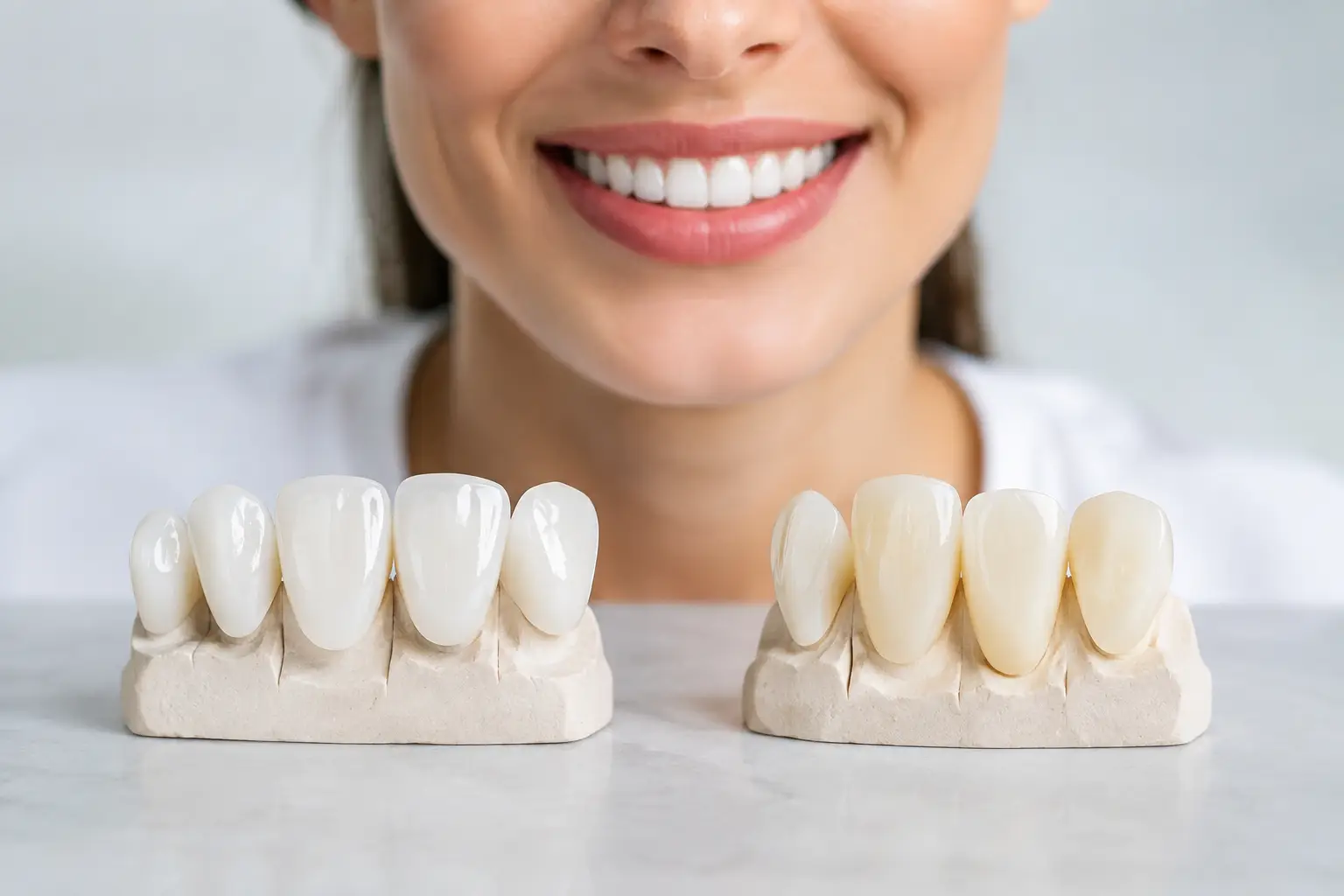
A brighter, more balanced smile can change how you feel in photos, meetings, and everyday conversations. But when patients ask about porcelain versus composite veneers, they are usually looking for more than a cosmetic comparison. They want to know which option will look natural, fit their lifestyle, respect their budget, and protect their long-term dental health.
Both materials can improve teeth affected by discoloration, small chips, uneven edges, gaps, or minor shape differences. The better choice depends on your smile goals, bite, tooth structure, oral habits, and the level of maintenance you are comfortable with. A thoughtful consultation makes that decision much clearer.
Porcelain versus composite veneers: the key difference
Porcelain veneers are custom-made shells, typically created in a dental laboratory and bonded to the front surfaces of teeth. They are designed with shade, shape, translucency, and facial balance in mind, which allows for a highly refined result.
Composite veneers are shaped directly on the teeth using tooth-colored resin. Your dentist applies the material in layers, sculpts it into the desired form, and hardens it with a curing light. Because the resin is placed directly at the appointment, composite treatment can often be completed more quickly.
Neither material is automatically "better." Porcelain is generally the more durable and stain-resistant choice. Composite can be an appealing option for patients who want a conservative approach, need a smaller correction, or prefer a lower initial investment.
How porcelain veneers look and perform
Porcelain reflects light in a way that closely resembles natural enamel. For patients seeking a polished, natural-looking smile transformation, this quality is one of porcelain's strongest advantages. It also resists common stains from coffee, tea, red wine, and tobacco better than composite resin.
With good home care and regular dental visits, porcelain veneers can last many years. They are less likely to lose their gloss over time, and their smooth surface tends to hold up well against everyday use. Porcelain is especially worth considering when several front teeth need color, shape, or proportion changes that should remain consistent over the long term.
The trade-off is that porcelain veneers usually require more planning and a higher initial cost. A small amount of enamel often needs to be adjusted to create room for the veneer and help it sit naturally against the gumline. While preparation can be conservative in the right case, veneer treatment is generally considered irreversible because enamel does not grow back.
Porcelain can also fracture if it is subjected to excessive force. Patients who clench or grind their teeth may still be candidates, but they may need a protective nightguard after treatment. Your dentist should evaluate your bite before placing veneers, rather than focusing on appearance alone.
When composite veneers may be the right fit
Composite veneers can create a meaningful improvement with less extensive treatment in many cases. They are commonly used to soften a chipped edge, close a small gap, improve the shape of a narrow tooth, or blend uneven contours. For the right smile, resin can look very natural and preserve more existing tooth structure.
A major advantage is repairability. If composite chips or wears, it can often be repaired or refreshed directly in the dental office. That can be reassuring for patients who play sports, have active lifestyles, or are not ready to commit to porcelain.
Composite is more porous than porcelain, however. It can pick up stains and gradually lose some surface shine, particularly without consistent brushing, flossing, and professional cleanings. It may also wear more quickly and require periodic polishing, touch-ups, or replacement. A patient who wants the most stable color and surface finish over many years may prefer porcelain.
Treatment time is another practical difference. Direct composite veneers may be completed in one visit, depending on how many teeth are involved and how complex the changes are. Porcelain usually requires at least two appointments: one for planning and preparation, then another to bond the completed veneers after they are fabricated.
Cost is only one part of the decision
Composite veneers generally cost less upfront than porcelain veneers. That can make them a practical entry point for patients who want visible improvement without making a larger immediate investment. Still, the lower initial cost should be weighed against the likelihood of maintenance, polishing, repairs, and replacement over time.
Porcelain usually involves a greater initial investment because each veneer is custom fabricated and requires detailed planning. For many patients, its longevity, stain resistance, and refined esthetics make that investment worthwhile. The right value is not simply the lowest fee. It is the treatment that matches your priorities and can be maintained comfortably over time.
During a cosmetic consultation, it helps to be open about your budget and timeline. A good treatment plan should explain what each option can realistically accomplish, where compromises may be involved, and whether phased treatment or available financing may make your preferred plan more manageable.
Your existing teeth and bite matter first
Veneers are not a substitute for healthy gums and stable teeth. Cavities, gum inflammation, cracked teeth, active grinding, and bite problems should be addressed before cosmetic work begins. Placing a beautiful veneer on a tooth with an unresolved health concern can lead to disappointment and additional treatment later.
Whitening may also be part of the conversation. Veneers do not respond to whitening products once they are placed. If you are considering whitening your natural teeth, it is usually best to decide on that shade before finalizing veneer color. This is especially important when veneers will be placed on only one or a few front teeth.
Clear aligner treatment can be helpful before veneers when crowding, spacing, or tooth position is affecting the final result. In some situations, moving teeth first allows for a more conservative veneer design and a more balanced smile. Cosmetic dentistry works best when every part of the plan supports the health and function of the smile.
What the veneer process should feel like
You should never feel rushed into choosing a veneer material. The first step is a conversation about what you notice when you smile, what you would like to change, and what you hope your result will look like. Photos, digital planning, and a careful examination help translate those goals into a treatment plan that is realistic for your teeth.
If porcelain is recommended, your dentist may prepare the teeth conservatively, take impressions or digital scans, and place temporary veneers when appropriate. At the final visit, the veneers are checked for fit, shade, and bite before they are bonded. This attention to detail is what helps them look like part of your smile rather than a separate cosmetic layer.
For composite veneers, the dentist selects a shade, prepares the surface as needed, and places the resin in carefully shaped layers. The material is polished to create a smooth, natural finish. Although the process may be faster, artistic planning still matters. Small changes in contour and proportion can make a significant difference in the final appearance.
Caring for either type of veneer
Porcelain and composite veneers both benefit from simple, consistent care. Brush twice daily with a nonabrasive toothpaste, floss carefully, and keep regular preventive appointments. Avoid using your teeth to open packaging, bite fingernails, or chew hard objects such as ice.
If you grind your teeth at night, a custom nightguard can protect both veneers and natural enamel. Patients who enjoy coffee, tea, or red wine do not necessarily need to give them up, but composite veneers may need more frequent polishing to maintain their original brightness. Routine professional care gives your dental team the chance to monitor veneer edges, gum health, and bite changes before small concerns become larger ones.
Choosing a smile that feels like you
The best veneer treatment is not about choosing the most expensive material or copying someone else's smile. It is about selecting an option that supports your goals, oral health, comfort, and daily life. At Ashar Dentistry, a cosmetic consultation is designed to give you clear answers without pressure, so you can understand the benefits and limitations of each approach.
If you are considering veneers, bring photos of smiles you like and be honest about what you want to change. A personalized conversation can turn a broad cosmetic goal into a treatment plan that feels natural, practical, and genuinely your own.
This article is general dental-health information from Ashar Dentistry in McKinney, TX and is not a substitute for an exam or personalised advice. Questions about your own teeth? Call us or book a visit.