
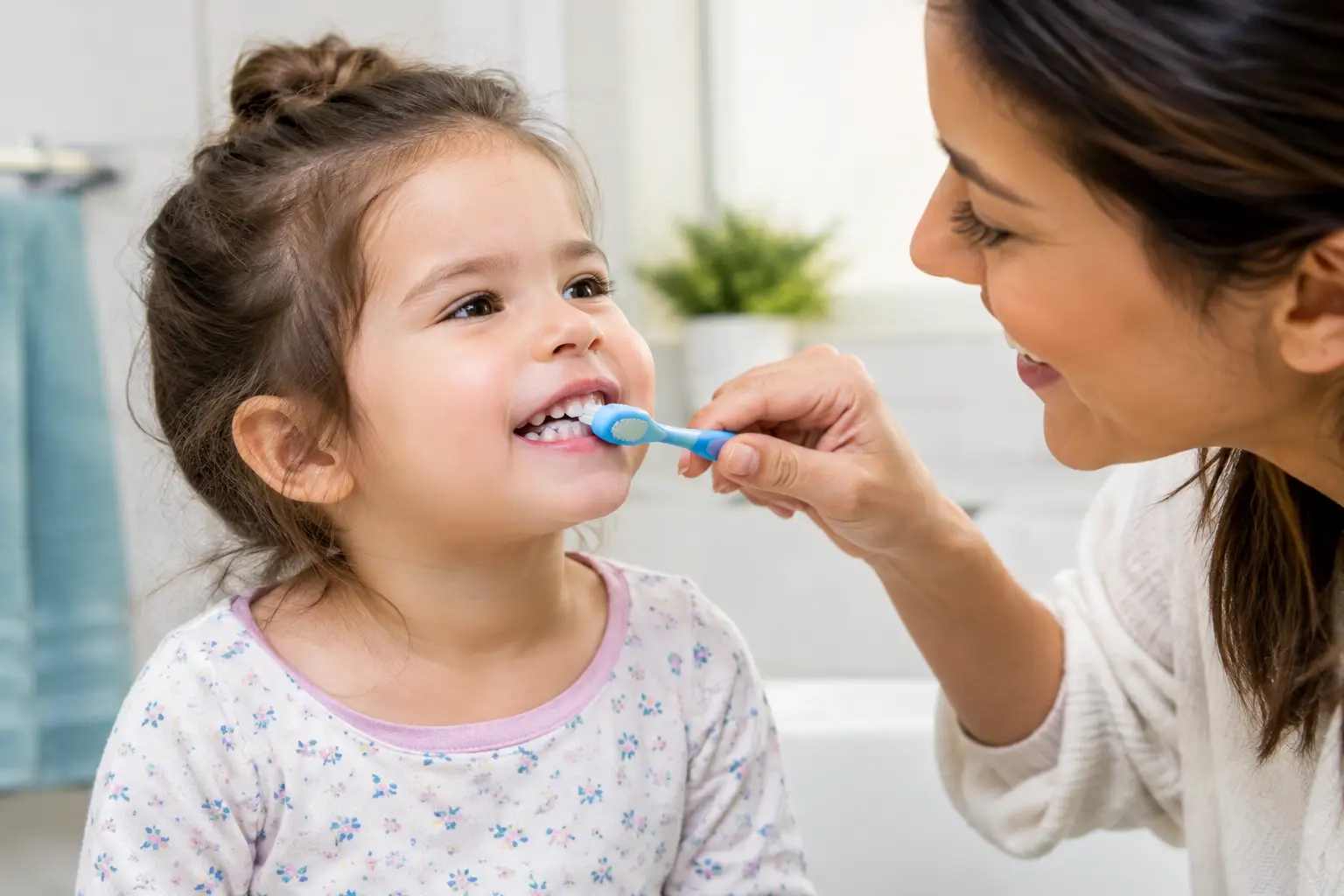
A toddler who clamps their mouth shut, grabs the toothbrush, or suddenly needs a snack the moment brushing begins is not giving you a hard time. They are having a hard time with a new skill, a strong preference for control, or a routine that arrives when they are already tired. Brushing toddler teeth can be messy and occasionally frustrating, but it is also one of the most valuable health habits you can build at home.
Baby teeth matter. They support clear speech, comfortable chewing, proper space for permanent teeth, and a child’s confidence in smiling. Early cavities can progress quickly and may cause pain, infection, missed school, or difficulty eating. The goal is not a picture-perfect two minutes from day one. It is steady, gentle consistency that helps your child learn that toothbrushing is simply part of daily life.
When to Start Brushing Toddler Teeth
Dental care starts before a child can brush independently. Once the first tooth appears, clean it twice daily with a soft, age-appropriate toothbrush. If your child is already a toddler, begin where you are. There is no need to feel behind. A reliable morning and bedtime routine can make a meaningful difference quickly.
Parents should do the brushing at this stage, even if a toddler wants a turn. Young children generally do not have the hand control or attention span to clean every tooth well. Letting them practice first can encourage cooperation, then calmly explain that it is your turn to finish. Think of it as teamwork rather than a power struggle.
The nighttime brushing matters especially because saliva flow decreases during sleep. Milk, juice, crackers, fruit snacks, and other carbohydrate-containing foods can leave sugars on teeth for bacteria to use overnight. After bedtime brushing, water is the best choice if your child asks for a drink.
Use the Right Amount of Fluoride Toothpaste
Fluoride strengthens tooth enamel and helps prevent cavities. For children under age 3, use a tiny smear of fluoride toothpaste - about the size of a grain of rice. From ages 3 to 6, use a pea-sized amount. Encourage your child to spit when they are able, but do not worry if they cannot yet. The small recommended amount is designed with young children in mind.
Choose a fluoride toothpaste with a flavor your child can tolerate, but avoid presenting it as candy. Keep the tube out of reach and dispense the toothpaste yourself. If you have questions about your child’s cavity risk, fluoride exposure, or toothpaste choice, your family dentist can offer guidance tailored to your child.
A Simple Routine That Toddlers Can Accept
Toddlers respond well to routines because routines reduce surprises. Brush at the same points each day, ideally after breakfast and before bed. A short warning can help with transitions: “After we put on pajamas, we brush teeth.” Then follow through calmly.
Positioning often makes more difference than parents expect. Some children do well sitting on a parent’s lap with their head resting against the parent’s body. Others are more comfortable lying down on a bed or changing table while a parent brushes from behind their head. This gives you a clear view of the back teeth, where plaque can collect easily.
Use small, gentle circles along the gumline and on the chewing surfaces. Brush the outside, inside, and top of each tooth. You do not need to scrub hard. Firm brushing can irritate tender gums and make a reluctant child even less willing next time.
A two-minute song or timer can help, but it is not required. For a child who is resisting, a thorough 30 to 60 seconds is better than abandoning the attempt altogether. Gradually work toward a more complete routine as cooperation improves.
Give Your Toddler Choices, Not Control of the Outcome
Toddlers naturally test independence. You can respect that need without turning dental hygiene into a negotiation. Offer two acceptable choices: “Do you want the blue toothbrush or the green one?” “Would you like to brush in the bathroom or while sitting on my lap?”
Avoid asking, “Do you want to brush your teeth?” when brushing is not optional. A calm, matter-of-fact approach teaches that this is a normal responsibility, like buckling a seat belt. If they want to hold a second toothbrush while you use the cleaning toothbrush, that can be a helpful compromise.
Some families find that a favorite stuffed animal needs its teeth brushed first. Others use a mirror so the child can watch. The best approach depends on your child’s personality. What matters is choosing a method you can repeat, especially on busy evenings.
What to Do When Your Toddler Refuses
Resistance is common, and it does not mean you have failed. Stay calm and keep your language brief. Long explanations during a meltdown rarely make the moment easier. You might say, “I know you do not like this. I will be gentle, and then we will be all done.”
If your child is upset, prioritize safety. Keep their head supported, avoid forcing the toothbrush deeply into the mouth, and use a soft touch. You may need to complete brushing efficiently rather than aiming for a relaxed experience that night. Then reset the next day without shame or threats.
Try not to use sweets as a reward for toothbrushing. A sticker, extra bedtime story, high-five, or praise can reinforce the routine without sending a mixed message about sugar. Specific praise is often effective: “You opened your mouth so wide. That helped me clean your back teeth.”
Don’t Forget the Spaces Between Teeth
When two teeth touch, a toothbrush cannot fully clean the space between them. Flossing should begin as soon as those contacts appear. Many toddlers tolerate disposable flossers more easily than traditional string floss, but a parent should always handle the flosser. Use a gentle in-and-out motion and keep it out of reach when you are finished.
Flossing every night may feel ambitious at first. Start with the tightest contact or one small area, then build from there. Consistency is more useful than trying to do everything perfectly for three nights and then stopping.
Food and Drink Habits That Support Healthy Teeth
Brushing does essential work, but frequent exposure to sugar and acid still raises cavity risk. It is not only about how much sugar a child eats. How often they snack or sip can matter just as much. Constant grazing gives mouth bacteria repeated fuel throughout the day.
Offer water between meals when possible, and reserve juice for occasional mealtime use rather than all-day sipping. Limit sticky snacks that cling to teeth, such as gummies and fruit snacks. Milk is nutritious, but it should not be used as a bedtime drink after teeth are brushed. If a child uses a sippy cup or bottle for comfort, gradually shifting toward water is a practical step for their teeth.
You do not need to create fear around food. A realistic family approach is to pair treats with meals, maintain regular brushing, and avoid letting sugary drinks become a frequent habit.
When to Schedule a Dental Visit
The first dental visit is typically recommended by a child’s first birthday or within six months of the first tooth appearing. Early visits are not only about looking for cavities. They help a child become familiar with the dental environment, allow parents to ask questions, and give the dentist a chance to monitor development, bite patterns, and oral habits.
Call sooner if you notice white, brown, or black spots on teeth; persistent bad breath; swollen gums; tooth pain; sensitivity; a chipped tooth; or a fall that injures the mouth. White, chalky areas near the gumline can be an early sign of enamel weakening, and addressing them promptly may prevent a more serious cavity.
At Ashar Dentistry, we understand that a child’s early dental experiences can shape how they feel about care for years to come. A gentle, patient visit gives your family a place to ask questions and build a preventive plan that fits your child.
Tonight, focus on one manageable win: choose the toothbrush, use the right amount of toothpaste, and finish the day with clean teeth. Those small, repeated moments are how healthy lifelong habits begin.
This article is general dental-health information from Ashar Dentistry in McKinney, TX and is not a substitute for an exam or personalised advice. Questions about your own teeth? Call us or book a visit.