
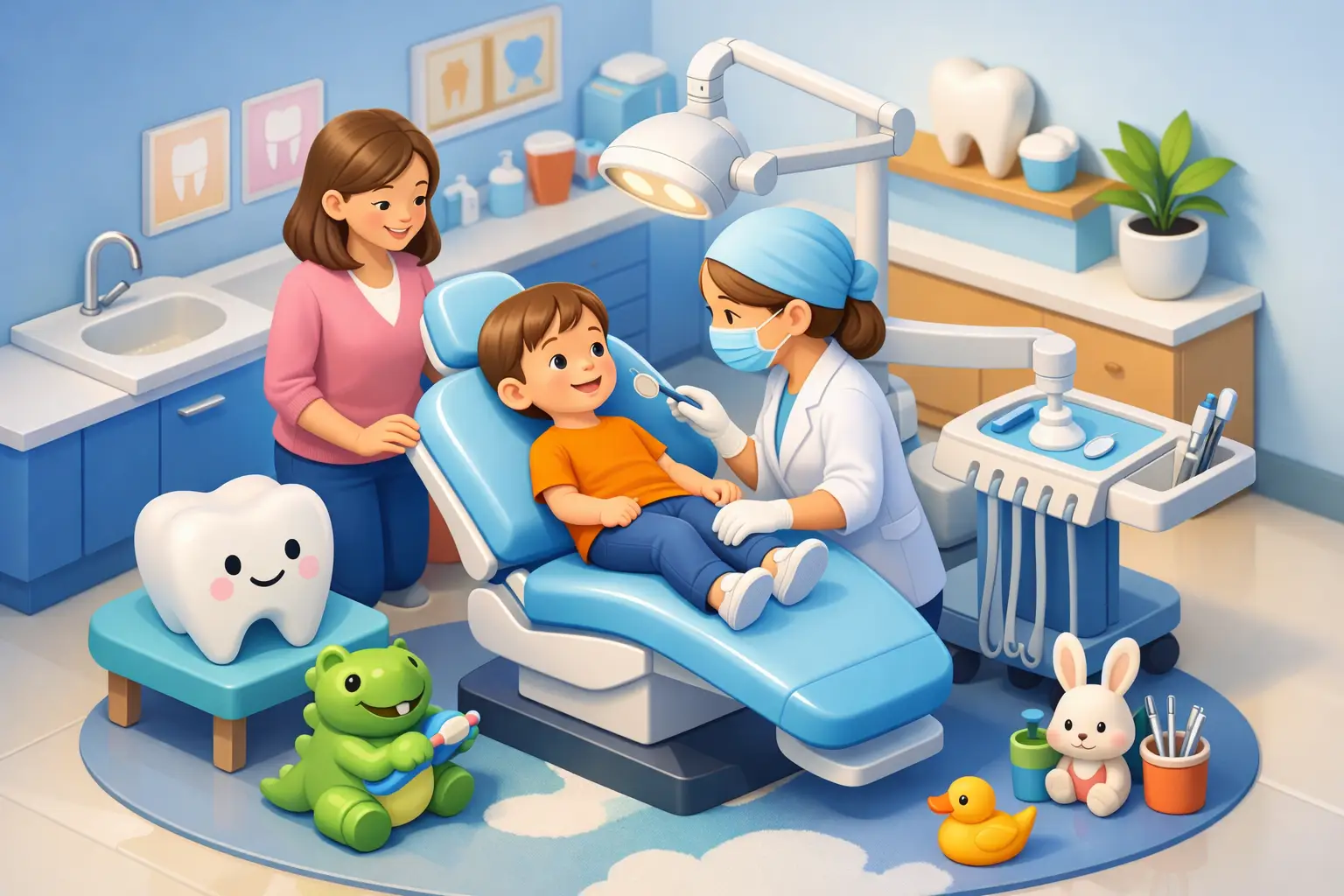
A first dental visit for child is often much easier than parents expect. There may be no x-rays, no cleaning, and no pressure to sit perfectly still. The real goal is simple: help your child become comfortable with the dental office while a dentist checks that teeth, gums, jaw development, and early habits are on the right track.
For many North Dallas families, the hardest part is not the appointment itself. It is deciding when to schedule it and wondering how a young child will respond. A calm, early introduction can turn dental care into an ordinary part of growing up rather than something to fear later.
When should your child have a first dental visit?
The American Academy of Pediatric Dentistry recommends a first dental appointment by a child’s first birthday or within six months of the first tooth appearing, whichever comes first. That can sound early, especially when there are only one or two tiny teeth to examine. But baby teeth matter. They support chewing, speech development, spacing for permanent teeth, and a child’s ability to smile comfortably.
An early visit also gives parents clear, personalized guidance before small concerns become more complicated. Cavities can develop soon after teeth erupt, particularly when a child frequently sips milk, juice, or other sweet drinks. A dentist can assess cavity risk, review brushing technique, and talk through feeding and comfort habits without judgment.
If your child is older and has not yet seen a dentist, there is no need to feel behind. Schedule the visit now. The best time to begin regular care is the next available opportunity.
What happens at a child’s first dental appointment?
A first visit is designed around your child’s age, comfort level, and ability to participate. For an infant or toddler, the dentist may examine the mouth while the child sits on a parent’s lap. Older children may sit in the dental chair, take a short ride up and down, and learn about the tools in friendly, age-appropriate terms.
The exam typically includes a gentle look at the teeth and gums, bite and jaw development, oral tissues, and signs of decay or injury. The dentist may also discuss how teeth are erupting and whether anything warrants monitoring. X-rays are not automatically required at every first appointment. They are recommended only when they will provide useful information that cannot be gathered through the visual exam, such as concern about cavities between teeth or development beneath the gums.
Depending on your child’s age and cooperation, the team may clean the teeth, apply fluoride, or simply focus on building familiarity. That is not a failed visit. A positive introduction has real value, especially for a child who is shy, very young, sensory-sensitive, or nervous in new environments.
Questions your dentist may ask
Expect a conversation about daily routines as well as teeth. Be ready to share whether your child uses a bottle or sippy cup at bedtime, drinks fluoridated water, sucks a thumb or pacifier, snores, grinds teeth, or has had falls or mouth injuries. Mention medications, medical conditions, and any family history of dental concerns.
These details help the dentist make recommendations that fit your family rather than offering one-size-fits-all advice. For example, thumb-sucking is common and often not concerning in very young children. The guidance changes if the habit continues as permanent teeth begin to develop.
How to prepare for the first dental visit for your child
Keep the lead-up simple and positive. You do not need to create a big event around the appointment. In fact, too much buildup can make an anxious child wonder whether something scary is about to happen.
Choose a time when your child is usually rested and fed. For toddlers and preschoolers, an appointment before nap time or after a long day may be more difficult. Bring a favorite comfort item if that helps, along with insurance information, a list of medications, and any questions you want answered.
At home, use calm, honest language. You might say, “The dentist will count your teeth and help us keep your smile healthy.” Avoid phrases such as “It won’t hurt” or “Don’t be scared” before your child has expressed worry. Even with good intentions, those statements can introduce fear they did not have.
A few playful steps can help:
- Read a children’s book about visiting the dentist or play dentist at home with a stuffed animal.
- Let your child practice opening wide and counting teeth in a mirror.
- Explain that the dental chair may move and the team may use a small mirror to look around.
- Plan a quiet, enjoyable activity afterward, rather than making sweets the reward.
Parents should also know that children take emotional cues from the adults around them. If you have dental anxiety, you do not need to pretend that you love appointments. Simply keep the focus on your child’s experience and let the dental team know privately if you have concerns.
Building healthy habits between visits
The first appointment is a starting point, but home routines do most of the daily work. Begin cleaning your baby’s gums with a soft cloth even before teeth arrive. Once a tooth erupts, brush twice a day with a soft, age-appropriate toothbrush.
For children younger than 3, use a smear of fluoride toothpaste about the size of a grain of rice. For children ages 3 to 6, use a pea-sized amount and help them spit out the excess. Young children need hands-on help with brushing longer than many parents realize. Most do not have the coordination to brush thoroughly alone until around age 6 to 8.
Limit frequent exposure to sugar rather than focusing only on the total amount eaten in a day. A cookie with a meal is generally less risky for teeth than grazing on crackers, gummies, or sweet drinks over several hours. Water between meals is the most tooth-friendly choice. If your child takes medication that is sweetened or causes dry mouth, ask the dentist how to protect their teeth.
What if your child cries or refuses the chair?
Crying, clinging, or refusing to open is common, particularly between ages 1 and 3. It does not mean your child is difficult or that you have done anything wrong. A gentle dental team will adjust the pace, use simple language, and decide what can reasonably be completed that day.
Sometimes the right approach is a brief “happy visit” focused on meeting the team and seeing the chair. Other times, a parent-lap exam is enough to complete a meaningful assessment. If treatment is needed, the dentist can explain the options, timing, and comfort strategies clearly. The best plan depends on the child’s age, the urgency of the concern, and their ability to cooperate safely.
Avoid using dental visits as a consequence for behavior or talking about them as something to endure. Consistent, neutral language helps more than promises or threats. Children learn over time that the office is a place where people know them, explain what is happening, and help keep their mouths healthy.
When to call sooner than the next routine visit
Do not wait for a scheduled checkup if your child has tooth pain, facial swelling, a cracked or knocked-out tooth, bleeding that does not stop, a pimple-like bump on the gums, or a darkened tooth after a fall. Dental injuries and infections can require timely attention, even when the affected tooth is a baby tooth.
You should also schedule an evaluation if you notice persistent bad breath despite brushing, visible spots or holes in teeth, difficulty chewing, or sensitivity to hot, cold, or sweet foods. Early care is typically more comfortable, more conservative, and easier for a child to tolerate.
At Ashar Dentistry, families can expect a calm, personalized introduction to care that respects each child’s pace while giving parents straightforward answers. Your child does not need a perfect first appointment. They only need a caring first step - one that helps make the next visit feel familiar.
This article is general dental-health information from Ashar Dentistry in McKinney, TX and is not a substitute for an exam or personalised advice. Questions about your own teeth? Call us or book a visit.