
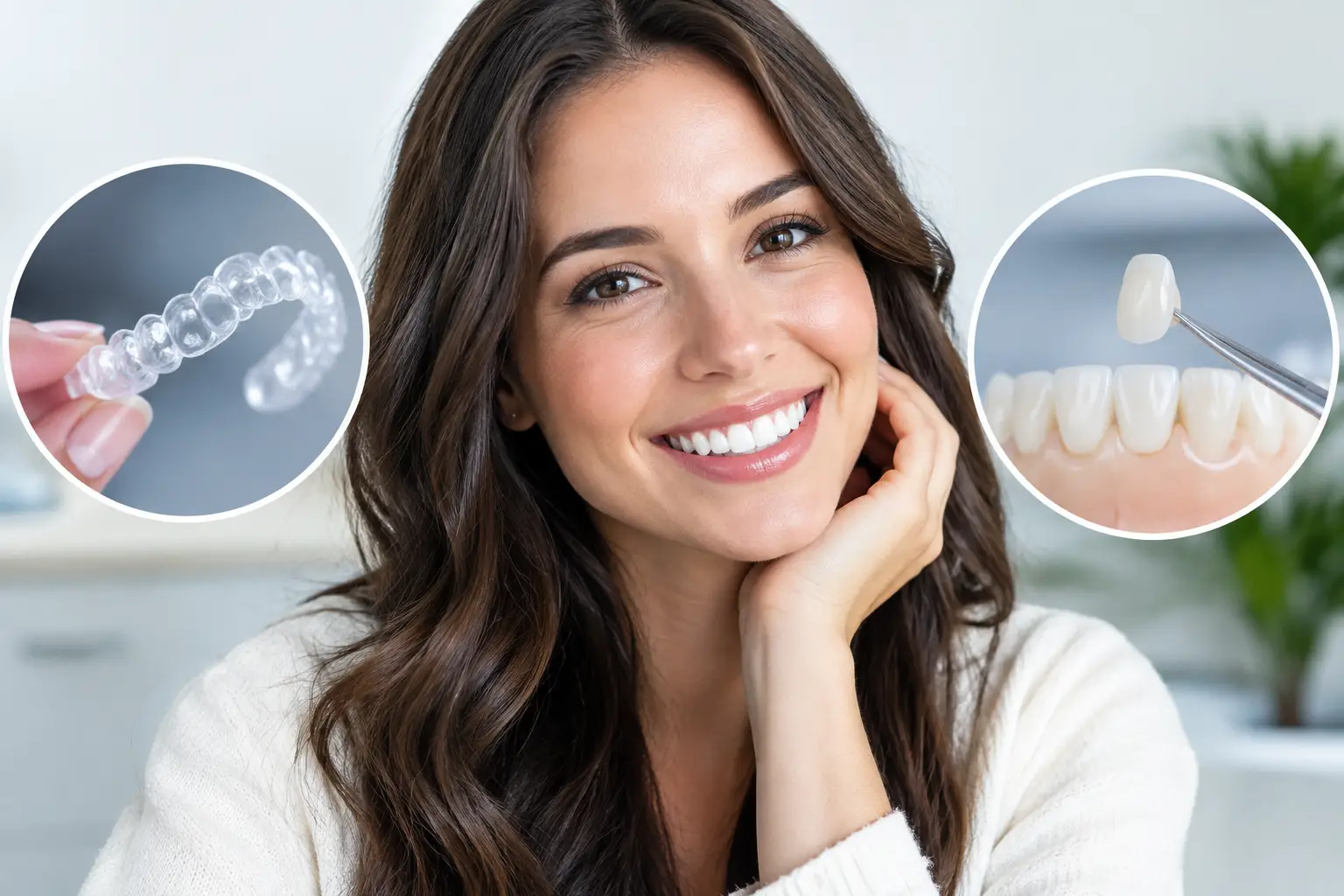
A crowded lower tooth, a gap that stands out in photos, or front teeth that look worn can make you wonder which cosmetic treatment will make the biggest difference. When comparing Invisalign versus veneers, the right choice is not simply about which treatment looks better. It depends on what is causing your concern, the health of your teeth, the changes you want, and how much treatment you are comfortable with.
Both options can create a more confident smile, but they work in fundamentally different ways. Invisalign moves natural teeth into healthier, more balanced positions. Veneers reshape the visible appearance of selected teeth with custom porcelain shells. A thoughtful consultation can help you choose a plan that protects your oral health while delivering results that feel like you.
Invisalign Versus Veneers: The Fundamental Difference
Invisalign uses a series of clear, custom aligners to gradually guide teeth into planned positions. It can address concerns such as crowding, spacing, certain bite issues, and teeth that appear crooked or uneven because of their placement. The goal is to improve alignment using your natural teeth.
Veneers are thin, custom-made porcelain coverings bonded to the front surfaces of teeth, most often the teeth visible when you smile. They can improve the appearance of discoloration, chips, worn edges, small gaps, uneven shapes, and mild misalignment. Rather than moving teeth, veneers change what those teeth look like.
That distinction matters. If a tooth is healthy but sitting in the wrong place, orthodontic treatment may address the source of the issue. If teeth are positioned well but have color, shape, or surface concerns, veneers may be the more direct cosmetic solution. In some cases, the best outcome involves both treatments, usually Invisalign first and veneers afterward for final refinements.
When Invisalign May Be the Better Choice
Clear aligners are often an excellent choice for adults and teens who want a straighter smile without traditional brackets and wires. The aligners are removable, discreet, and designed around a personalized treatment plan. For many busy patients in McKinney and surrounding North Dallas communities, that flexibility makes treatment easier to fit around work, school, and social events.
Invisalign may make sense when you have noticeable crowding or spacing, teeth that tilt or rotate, or bite alignment concerns that affect your smile and function. Straightening teeth can also make daily brushing and flossing more manageable, especially when overlapping teeth create hard-to-clean areas.
Treatment length varies based on the complexity of movement needed. Some limited cosmetic cases can be completed in months, while more comprehensive plans may take a year or longer. Consistency is essential. Aligners generally need to be worn about 20 to 22 hours each day, with removal for meals, drinks other than water, and oral hygiene.
The trade-off is that Invisalign does not change tooth color, repair enamel chips, or make naturally small teeth larger. Professional whitening can be paired with aligner treatment for a brighter result, but teeth with significant wear, fractures, or shape differences may still benefit from restorative or cosmetic treatment afterward.
Invisalign is a health-minded cosmetic option
One benefit of orthodontic treatment is its conservative approach. Your tooth structure remains intact because the teeth are being repositioned rather than covered. For patients who want to preserve natural enamel and are willing to follow the daily wear schedule, this can be a meaningful advantage.
Clear aligners do require commitment. Skipping wear time can delay progress, and retainers are necessary after treatment to help maintain your new alignment. Teeth naturally shift over time, even after braces or aligners, so retention is part of protecting your investment.
When Veneers May Be the Better Choice
Veneers are designed for patients whose main concerns are cosmetic details on the fronts of their teeth. They can be especially effective when a smile has multiple concerns at once, such as stubborn discoloration, small chips, uneven edges, minor gaps, or teeth that look short or irregularly shaped.
Porcelain is valued for its natural translucency and stain resistance. When veneers are carefully planned to complement your facial features, tooth proportions, and smile line, they can look polished without appearing artificial. The goal is not to create one standard smile. It is to create a result that suits your features and feels comfortable to wear every day.
Veneers are often completed more quickly than orthodontic treatment. After planning and preparation, the teeth are scanned or impressed for custom fabrication. Temporary veneers may be used while your final restorations are created, followed by a bonding appointment where fit, bite, shade, and appearance are carefully evaluated.
Veneers require a permanent decision
Traditional veneers usually require removal of a small amount of enamel to create room for the porcelain. Because enamel does not grow back, veneers are considered an irreversible treatment. They are durable, but they will eventually need replacement due to normal wear, damage, or changes in the surrounding gums and teeth.
Veneers also do not correct significant bite problems or move teeth into a healthier position. Placing veneers over severely crowded or protruding teeth can require more tooth preparation than many patients expect. For that reason, moving teeth first may be the more conservative long-term choice when alignment is the primary issue.
How to Decide Between Invisalign and Veneers
The decision begins with a clear diagnosis, not a mirror test. Two smiles can look similarly crooked from the outside while requiring very different care. A comprehensive exam can evaluate tooth position, bite, gum health, enamel condition, existing fillings or crowns, and the stability of your results over time.
Ask yourself what you want to change. If you wish your teeth sat straighter, Invisalign may be the appropriate first step. If you like the position of your teeth but want to improve color, shape, or chips, veneers may be a stronger match. If you want both straighter teeth and a refined cosmetic finish, a phased approach may offer the most natural-looking result.
Budget and timing matter too. Invisalign treatment fees vary based on case complexity and length of treatment. Veneer costs depend on the number of teeth treated, the materials selected, and any preparation needed beforehand. A transparent consultation should discuss the full scope of care, including retainers after Invisalign and the future maintenance needs of veneers. Financing options can make an elective treatment plan more manageable for qualified patients.
Can You Get Invisalign Before Veneers?
Yes, and this sequence is often ideal for patients with misalignment plus cosmetic concerns. Invisalign can create better spacing and position before veneers are designed. This may reduce the amount of enamel that needs to be adjusted and allows each veneer to be made with more balanced proportions.
For example, someone with crowded front teeth, uneven edges, and deep staining may use aligners to straighten the teeth first. Once movement is complete, whitening, bonding, or a small number of veneers can address the remaining color and shape concerns. Not everyone needs that full plan, but it is worth discussing before committing to any permanent cosmetic work.
Your Smile Should Not Be a One-Size-Fits-All Plan
A beautiful result is only one part of good dentistry. Your gums should be healthy, your bite should feel comfortable, and your treatment should make sense for the way you live. At Ashar Dentistry, consultations are designed to give you clear answers without pressure, whether you are considering subtle alignment changes or a more complete smile transformation.
The most helpful next step is a personal evaluation where your goals, dental health, timeline, and comfort are all part of the conversation. With the right plan, you can move forward knowing your smile is being cared for, not simply covered up.
This article is general dental-health information from Ashar Dentistry in McKinney, TX and is not a substitute for an exam or personalised advice. Questions about your own teeth? Call us or book a visit.