
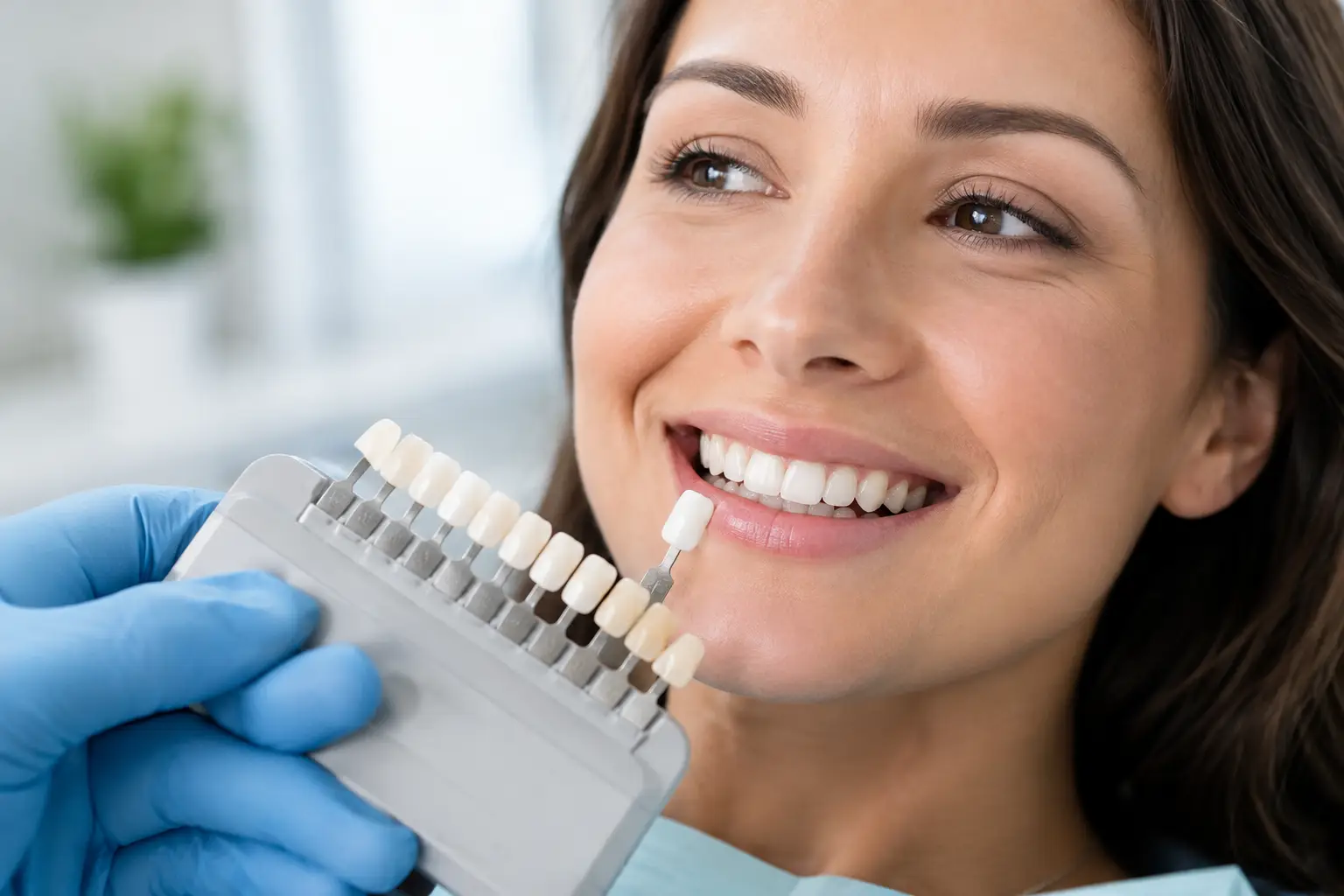
A tooth can be healthy, painless, and still be the first thing you notice in every photo. If you have mild crowding, uneven tooth edges, or one tooth that sits slightly forward or back, you may be wondering: can veneers fix crooked teeth? In many cases, veneers can make teeth look dramatically straighter. But they do not physically move teeth, and that distinction matters when choosing the right treatment for your smile and long-term oral health.
At Ashar Dentistry, we begin cosmetic treatment by listening to what you would like to change, evaluating your bite and dental health, and explaining the options in clear terms. For some patients, veneers are the efficient path to a polished, natural-looking result. For others, clear aligners or a combination approach will protect more healthy tooth structure and create a stronger foundation.
Can Veneers Fix Crooked Teeth or Just Cover Them?
Porcelain veneers are thin, custom-made shells that are bonded to the front surfaces of teeth. They can change a tooth's visible shape, width, length, color, and apparent position. By carefully designing each veneer, a dentist can make slightly rotated, crowded, uneven, or poorly proportioned teeth appear more aligned.
That makes veneers a cosmetic correction rather than orthodontic correction. The roots and actual positions of your teeth remain the same. A veneer can visually balance a tooth that angles inward, for example, but it will not move that tooth into a different place in the jaw.
This is not a drawback for every patient. If your concern is primarily appearance and your bite is stable, veneers can create an exceptional result without months of tooth movement. They are especially appealing to adults who want to address several smile concerns at once, such as discoloration that whitening cannot fully improve, worn edges, small gaps, and mild crookedness.
When Veneers May Be a Good Choice
Veneers tend to work best when the misalignment is mild to moderate and the teeth are otherwise healthy. A single tooth that looks slightly turned, teeth with uneven spacing, or front teeth that vary in shape can often be improved with a thoughtful veneer design.
They can also be a practical option when straightening alone would not meet your goals. Clear aligners can move teeth, but they do not change the color of deeply stained enamel, repair chips, or make naturally narrow teeth appear fuller. Veneers can address those aesthetic details in one coordinated treatment plan.
A well-designed veneer should look like a believable part of your smile, not a separate white surface placed over a tooth. Shade, translucency, facial proportions, gumline symmetry, and the way your teeth show when you speak all influence the final result. That is why planning matters as much as the veneer material itself.
When Orthodontic Treatment Is Usually Better
If teeth are significantly crowded, severely rotated, or positioned in a way that affects your bite, veneers may not be the most conservative or durable answer. Building a veneer over a tooth that sits far outside the ideal arch can require removing more enamel than is appropriate. It may also create a tooth that looks or feels too bulky.
Clear aligners can be a better first step when teeth need meaningful movement. By bringing teeth into healthier positions, aligners can improve how they fit together, make them easier to clean, and reduce the amount of cosmetic reshaping needed later. Some patients are happy with their smile after orthodontic treatment and professional whitening alone.
Bite concerns deserve particular attention. If you grind or clench your teeth, have an overbite or crossbite, or place heavy pressure on the front teeth, a cosmetic plan needs to account for those forces. Veneers are durable, but they are not indestructible. Correcting the underlying alignment or protecting the teeth with a custom nightguard may be part of creating a result that lasts.
Veneers vs. Clear Aligners for Crooked Teeth
The right choice is not simply about which option is faster. It is about what your teeth need and what you want your smile to look like when treatment is complete.
Clear aligners gradually move natural teeth. Treatment can take several months to more than a year, depending on the complexity of the case and how consistently aligners are worn. Aligners preserve the visible enamel surface and may improve bite function, but they require daily commitment and do not alter tooth color, shape, or old dental work.
Veneers can often be completed in a few appointments once your treatment plan is finalized. They can provide more immediate cosmetic change, including a brighter and more uniform smile. However, traditional porcelain veneers usually require some enamel preparation, making the decision irreversible. They also need good daily care and periodic dental monitoring.
For certain patients, the best solution is a combination. Clear aligners can first create better spacing and tooth positions. Then, minimal cosmetic bonding or a small number of veneers can refine shape, proportion, or color. This approach can be particularly valuable when you want a refined smile while preserving as much natural tooth structure as possible.
What Happens During a Veneer Consultation?
A veneer consultation should feel like a conversation, not a sales pitch. Your dentist will examine your teeth and gums, review X-rays or digital images as needed, and evaluate the way your upper and lower teeth meet. Existing fillings, cavities, gum inflammation, cracked teeth, and grinding habits may need to be addressed before cosmetic treatment begins.
You will also discuss what you see when you look in the mirror. Some patients want a subtle improvement that still looks unmistakably like their own smile. Others want a more noticeable change in brightness, symmetry, or tooth shape. Bringing up specific concerns, such as a tooth that looks shorter, darker, or more crooked than the others, helps guide the design process.
If veneers are appropriate, the next steps may include digital planning, shade selection, conservative tooth preparation, impressions or scans, and placement of the final restorations. Temporary veneers may be used while the final porcelain veneers are being created. At the placement visit, the fit, appearance, and bite are checked carefully before the veneers are bonded in place.
Caring for Veneers and Your Natural Teeth
Veneers do not require a complicated routine, but they do require consistent care. Brush twice daily with a nonabrasive toothpaste, clean between teeth every day, and keep regular preventive appointments. Healthy gums are essential to a beautiful veneer result because the gumline frames every tooth.
Avoid using your teeth as tools to open packages or bite hard objects. If you clench or grind, wearing a nightguard can help protect both veneers and natural teeth from excessive pressure. Porcelain is highly stain resistant, although coffee, tea, and tobacco can still affect the natural teeth and the edges around restorations over time.
It is also wise to remember that veneers are a long-term investment, not a permanent never-again procedure. With attentive care, porcelain veneers can last many years, but they may eventually need repair or replacement. Choosing a treatment plan that respects your bite, enamel, and goals gives those restorations their best chance of lasting beautifully.
A Straighter-Looking Smile Starts With the Right Plan
If mild crookedness keeps you from smiling freely, veneers may be able to create the balanced, confident appearance you want. If your teeth need true movement or your bite needs correction, clear aligners may be the healthier starting point. There is no one-size-fits-all answer, and you should never have to guess which option makes sense for your smile.
A personalized consultation can turn a vague concern into a clear plan, with comfort, function, and natural-looking results considered from the beginning. The next step can be as simple as scheduling an appointment and asking what is possible for your own teeth.
This article is general dental-health information from Ashar Dentistry in McKinney, TX and is not a substitute for an exam or personalised advice. Questions about your own teeth? Call us or book a visit.