
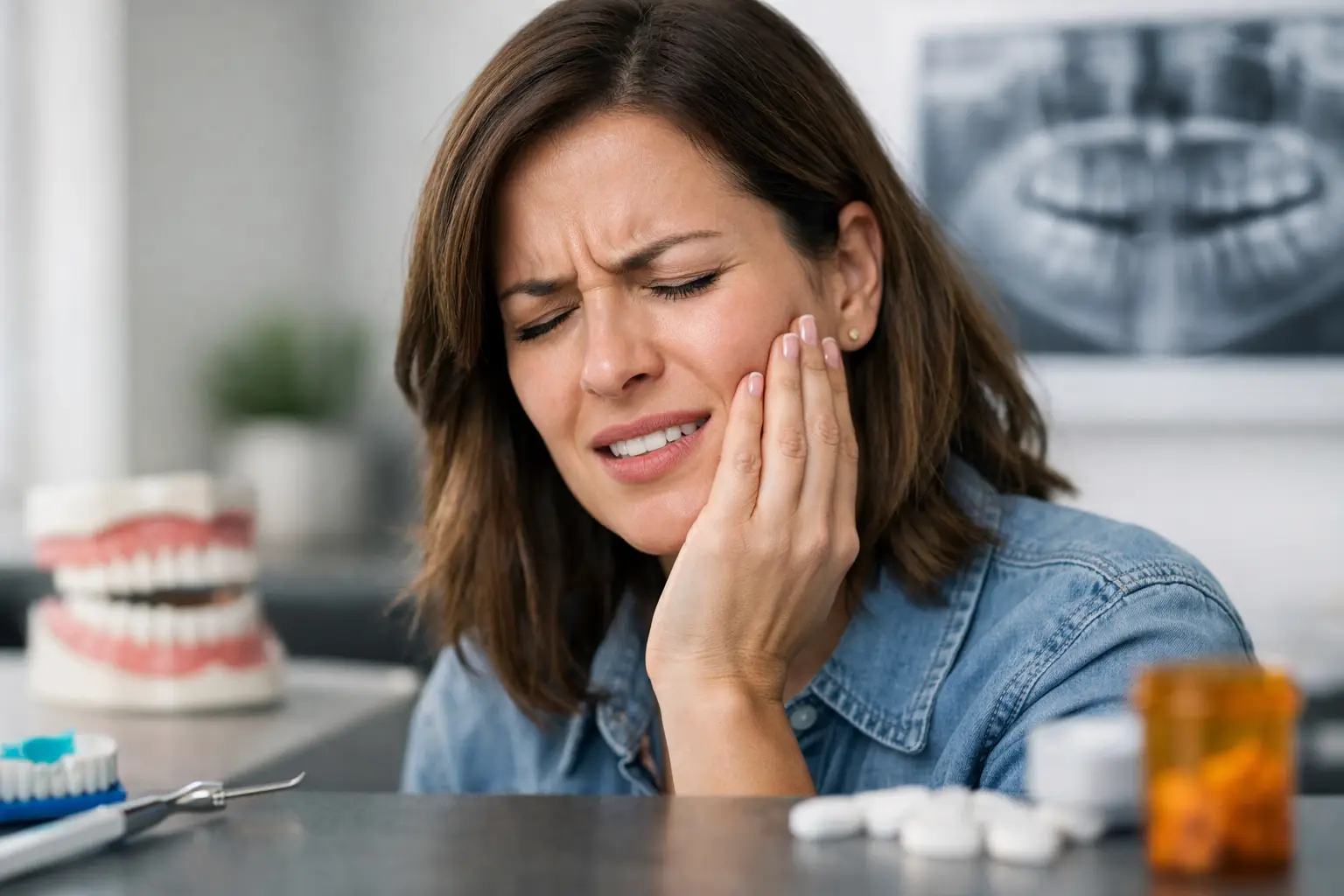
A toothache can make a normal workday, family dinner, or good night's sleep feel impossible. Toothache causes in adults range from a small cavity to a deeper infection, and the intensity of pain does not always reveal how serious the problem is. A mild ache deserves attention, especially if it returns, worsens, or makes you avoid chewing on one side.
The reassuring news is that most dental pain has a clear cause and a clear path forward once a dentist examines the tooth. Prompt care can often mean a simpler, more comfortable treatment and a better chance of preserving your natural tooth.
Common Toothache Causes in Adults
Tooth decay
Cavities are one of the most common reasons adults develop tooth pain. Bacteria in plaque produce acids that gradually wear through enamel. In its early stages, decay may cause no symptoms at all. As it moves deeper into the tooth, you may notice sensitivity to sweets, cold drinks, or hot coffee.
Once decay reaches the inner pulp, where the tooth's nerve and blood supply are located, pain may become sharp, lingering, or spontaneous. A filling can often restore a tooth when decay is found early. More advanced decay may require a crown or root canal treatment to remove infection and protect what remains of the tooth.
A cracked or fractured tooth
Teeth are strong, but years of chewing, clenching, large older fillings, injury, or biting something unexpectedly hard can create cracks. A cracked tooth may hurt only when you bite down or when you release your bite. It can also cause unpredictable sensitivity to temperature.
Cracks are not always visible at home, and they can be difficult to pinpoint because pain may seem to travel to nearby teeth. Treatment depends on the crack's location and depth. A crown may hold a damaged tooth together, while a deeper crack extending below the gumline can sometimes require more extensive care.
Gum disease and gum infection
A toothache does not always begin inside the tooth. Inflamed gums can become tender, swollen, and prone to bleeding. As gum disease progresses, infection can affect the bone and tissues that support the teeth, potentially causing soreness, loose teeth, or discomfort while chewing.
A localized gum abscess can create sudden pain, swelling, or a pimple-like bump near a tooth. Professional treatment is needed to clean the source of infection and protect your oral health. Antibiotics may be appropriate in certain situations, but they do not replace dental treatment to address the cause.
An abscessed or infected tooth
An infection inside a tooth can develop after untreated decay, trauma, or a deep crack allows bacteria to reach the pulp. Some people experience severe throbbing pain, facial swelling, tenderness to touch, or a bad taste in the mouth. Others have surprisingly little pain because the nerve inside the tooth has stopped responding.
A dental abscess should never be ignored. Infection can spread beyond the tooth and become a more serious health concern. Root canal treatment can often remove the infected tissue and save the tooth, followed by a restoration such as a crown when needed. In other cases, extraction may be the healthiest option, with replacement options such as a dental implant or bridge considered afterward.
Teeth grinding and jaw tension
Clenching or grinding your teeth, often during sleep or periods of stress, can leave teeth feeling sore or sensitive. You may wake with jaw tightness, headaches, worn tooth edges, or tenderness that seems to affect several teeth rather than one spot.
Grinding can place enough force on teeth to worsen small cracks, loosen restorations, and strain the jaw joint. A custom night guard may help protect your teeth, but your dentist should first rule out decay, infection, and other concerns that can mimic grinding-related pain.
Worn fillings, crowns, and other restorations
Dental restorations are designed to be durable, but they are not permanent. An older filling may chip, leak around its edges, or allow new decay to form beneath it. A crown can loosen or develop a problem at the margin where it meets the tooth.
Pain around a previously treated tooth is a reason to schedule an exam, even if the discomfort comes and goes. Repairing a restoration early can help prevent a small issue from becoming a larger one.
Sensitivity from exposed roots
Receding gums can expose tooth roots, which do not have the same protective enamel covering as the visible part of a tooth. This can lead to quick, sharp discomfort from cold air, icy drinks, brushing, or sweet foods. Aggressive brushing, gum disease, and natural changes over time can all contribute.
Desensitizing products may provide temporary relief, but persistent sensitivity deserves an evaluation. The right solution might be a fluoride treatment, bonding, gum care, or treatment for the underlying cause.
When Tooth Pain May Not Be Coming From a Tooth
Sinus pressure can sometimes feel like an ache in the upper back teeth, particularly during a cold, allergy flare-up, or sinus infection. Pain from the jaw joint or chewing muscles can also be mistaken for a toothache. Less commonly, nerve-related pain may create sensations that resemble dental pain.
Because these conditions can overlap, a thorough dental evaluation matters. Digital imaging and a careful exam help identify whether the source is a tooth, the gums, the bite, or something outside the mouth. If your dentist determines the issue is not dental, you can move forward with appropriate medical care rather than continuing to guess.
Signs You Need Urgent Dental Care
A toothache is worth scheduling promptly, but some symptoms call for same-day attention. Contact a dentist right away if you have facial or gum swelling, fever, difficulty swallowing, trouble breathing, uncontrolled bleeding, or pain that is severe and rapidly worsening.
Swelling that spreads into the face, jaw, neck, or around the eye should be treated as urgent. If breathing or swallowing is difficult, seek emergency medical care immediately. Do not wait to see whether the swelling improves overnight.
You should also call for an urgent appointment if a tooth is knocked out, broken after an injury, or causing pain that prevents you from sleeping or functioning normally. Early treatment can make a meaningful difference in comfort and in the ability to save the tooth.
What You Can Do Before Your Appointment
Temporary pain relief should never replace professional care, but a few simple measures can help while you wait to be seen. Rinse gently with warm salt water to keep the area clean, and carefully floss around the painful tooth in case food is trapped between teeth. A cold compress on the outside of the cheek may reduce swelling and discomfort.
Over-the-counter pain medicine can be helpful when used exactly as directed on the label and when safe for your health history. Avoid placing aspirin directly on the gums or tooth, as it can burn oral tissue. Avoid using heat on facial swelling, and do not try to pop a gum bump or drain an abscess yourself.
If cold or heat triggers the pain, choose lukewarm foods and drinks until your visit. Chew on the opposite side when possible, but remember that avoiding the tooth is only a short-term adjustment. The underlying problem still needs attention.
A Clear Plan for Lasting Relief
At Ashar Dentistry, the goal is not simply to quiet the pain. Your care begins with listening to what you are feeling, examining the area carefully, and explaining what the findings mean in plain language. From a conservative filling to root canal treatment, a crown, or gum therapy, your treatment plan should fit the condition of your tooth and your long-term goals.
Dental anxiety can make it tempting to wait until pain becomes unbearable. You do not have to manage it alone. A calm conversation, modern diagnostic tools, and a clear step-by-step plan can replace uncertainty with a practical next step. If a tooth is aching, sensitive, swollen, or simply not feeling right, schedule an appointment before a manageable concern becomes an urgent one.
This article is general dental-health information from Ashar Dentistry in McKinney, TX and is not a substitute for an exam or personalised advice. Questions about your own teeth? Call us or book a visit.