
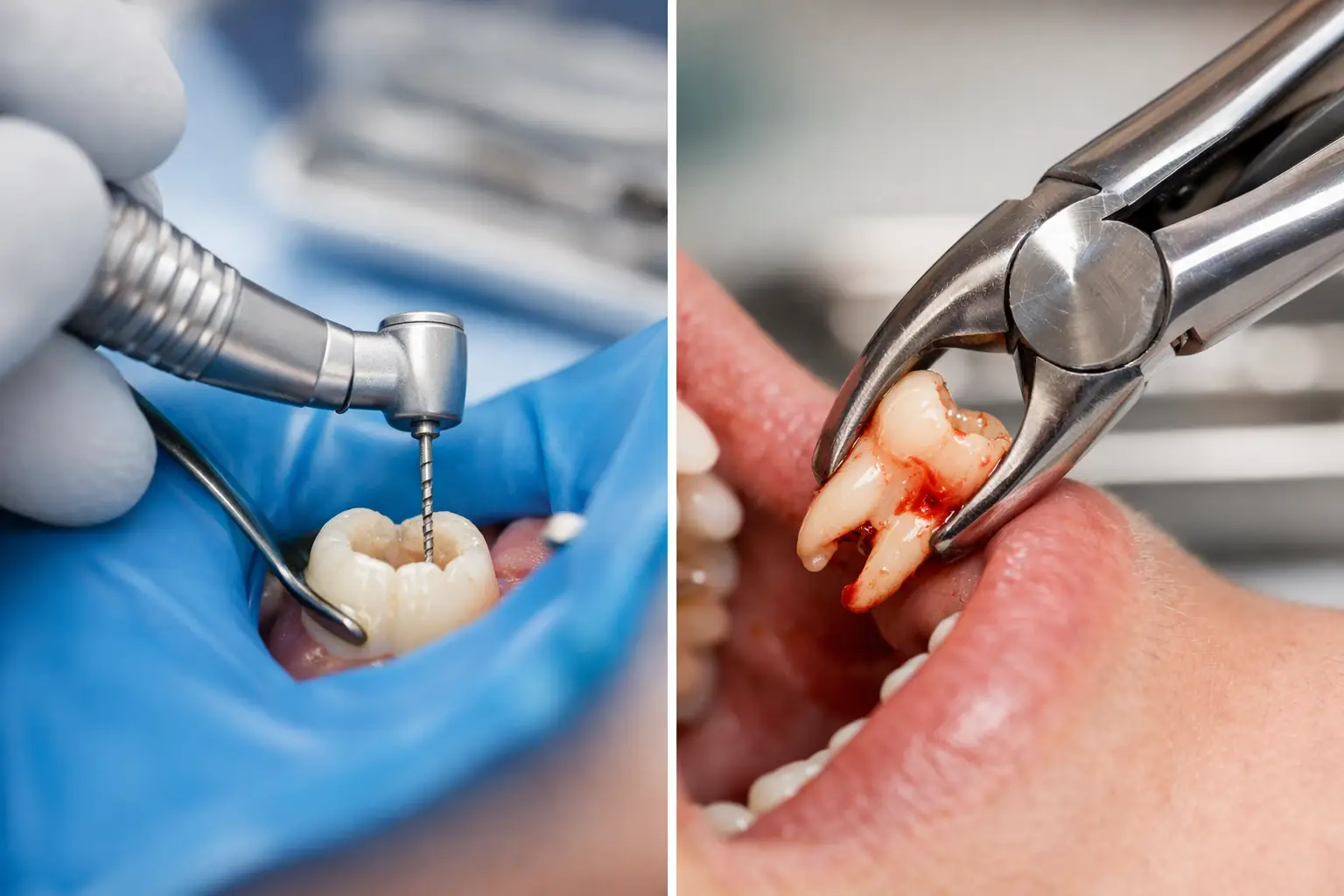
A severe toothache can make every option sound overwhelming. When you are weighing a root canal versus extraction, the goal is not simply to stop the pain today. It is to choose treatment that protects your overall oral health, fits the condition of your tooth, and makes sense for your long-term smile.
At Ashar Dentistry, we understand that a conversation about a damaged or infected tooth can bring real anxiety, especially when treatment feels urgent. A clear exam, digital imaging, and an honest discussion of your options can replace uncertainty with a practical plan.
Root Canal Versus Extraction: The Main Difference
A root canal treats the inside of a tooth that has been affected by deep decay, a crack, trauma, or infection. The dentist removes damaged or infected pulp tissue, disinfects the inner canals, and seals the tooth. In many cases, the tooth is then protected with a custom crown to restore strength and function.
An extraction removes the entire tooth from its socket. Extraction may be the healthiest choice when a tooth cannot be predictably restored, such as when it is severely fractured below the gumline, has extensive decay, or has lost too much supporting bone. Once a tooth is removed, the next question becomes whether and how to replace it.
Neither option is automatically better for every patient. The right recommendation depends on what can be saved, what will last, your bite, your health history, and your goals for treatment.
When Saving the Natural Tooth Makes Sense
Whenever a tooth has a good long-term prognosis, preserving it is often preferred. Natural teeth help you chew, speak, and maintain the alignment of the teeth around them. They also preserve the stimulation your jawbone receives during biting and chewing.
A root canal may be a strong option when infection is limited to the pulp inside the tooth and there is enough healthy tooth structure remaining to support a restoration. A tooth can look badly damaged at first glance yet still be restorable with careful treatment and a crown.
Root canal treatment has an outdated reputation for being unusually painful. In reality, modern anesthesia and gentle techniques are designed to make the procedure feel similar to receiving a filling. For many patients, the infection causing the toothache is far more uncomfortable than the treatment itself. Sensitivity for a few days afterward is common, but it can usually be managed with the aftercare instructions your dentist provides.
A successful root canal does require follow-through. Back teeth, in particular, often need a crown because they absorb substantial chewing force. Delaying the final restoration can leave the treated tooth vulnerable to fracture, which may compromise the result.
Benefits of keeping your tooth
Keeping a healthy, functional natural tooth avoids the need for tooth replacement right away. It can also prevent nearby teeth from shifting into the open space. For patients who value a conservative approach, root canal treatment can preserve the appearance and function of their smile while addressing infection at its source.
That said, saving a tooth should be a predictable investment, not an attempt to hold onto a tooth at any cost. If the remaining structure is too weak or the crack extends deeply into the root, a root canal and crown may not offer the durable result you deserve.
When Extraction May Be the Better Choice
Extraction can be recommended when restoring the tooth would be unlikely to succeed. Common examples include a vertical root fracture, decay that extends too far below the gumline, advanced gum disease with significant bone loss, or a tooth that has broken down beyond the support of a crown.
Removing a severely infected tooth can also provide relief and prevent infection from spreading. It is not a failure or a shortcut when the tooth is truly non-restorable. It is a necessary step toward restoring comfort and building a healthier foundation for your smile.
The decision should include a conversation about the space left behind. Some teeth, such as wisdom teeth, often do not require replacement. Most other missing teeth should be evaluated for replacement, especially if they affect chewing, appearance, or bite stability.
Without a replacement, neighboring teeth can drift and the opposing tooth may gradually move out of position. The jawbone in the extraction area can also lose volume over time because it no longer receives stimulation from a tooth root. These changes do not happen overnight, but they can make future treatment more complex.
Understanding Your Replacement Options
If extraction is the best clinical option, there are several ways to restore the space. The right choice depends on the location of the tooth, the health of surrounding teeth and gums, your timeline, and your budget.
A dental implant replaces the root of a missing tooth with a small post placed in the jawbone, then supports a natural-looking crown. Because it functions independently, it does not require altering the neighboring teeth. Implants are often an excellent long-term solution for eligible patients, though treatment takes time and requires adequate bone and healthy gums.
A dental bridge fills the gap with a replacement tooth supported by crowns on the teeth beside it. It can be a good option when adjacent teeth already need crowns or when an implant is not the right fit. A partial denture may also be appropriate when several teeth are missing or when a removable option better meets a patient's needs.
The cost comparison should account for the full picture. A root canal may be less costly upfront than extraction followed by an implant, but every case is different. Extraction alone can seem less expensive initially, yet replacing the missing tooth adds another stage of care. During your consultation, ask for a transparent treatment plan that includes the restoration needed to protect your result.
Questions That Help You Decide
A trusted dentist should explain the prognosis of each option in plain language. Rather than asking only, “Which one costs less?” consider asking what outcome is most likely to last and what treatment your tooth needs after the procedure.
It is helpful to ask whether the tooth has enough structure for a crown, whether there is a crack below the gumline, how much bone support remains, and what happens if you postpone treatment. If extraction is recommended, ask whether the tooth should be replaced and what replacement option best supports your bite.
Your comfort matters, too. Tell your dental team if you have anxiety, a strong gag reflex, previous difficult dental experiences, or concerns about pain control. Comfortable care is not an extra. It is part of planning treatment you can move forward with confidently.
Do Not Wait on Signs of Infection
Severe throbbing pain, swelling, a pimple-like bump on the gums, lingering sensitivity to heat, pain when biting, or a darkening tooth can signal a problem that needs prompt attention. Symptoms may come and go, but an infection inside a tooth does not heal on its own.
If swelling spreads toward your face or neck, you have trouble swallowing or breathing, or you develop a fever with dental swelling, seek urgent medical care immediately. For other dental emergencies, a timely evaluation can often make the difference between a tooth that can be restored and one that must be removed.
A Decision Built Around Your Long-Term Health
Choosing between a root canal and extraction is personal, but it should never feel like guesswork. The best plan is the one that treats the current problem, respects your comfort, and gives you a realistic path to lasting oral health.
If you are dealing with tooth pain or have been told you need treatment, schedule an evaluation before the problem has more time to progress. A thoughtful conversation and a clear plan can help you move from worrying about your tooth to feeling comfortable caring for your smile.
This article is general dental-health information from Ashar Dentistry in McKinney, TX and is not a substitute for an exam or personalised advice. Questions about your own teeth? Call us or book a visit.