
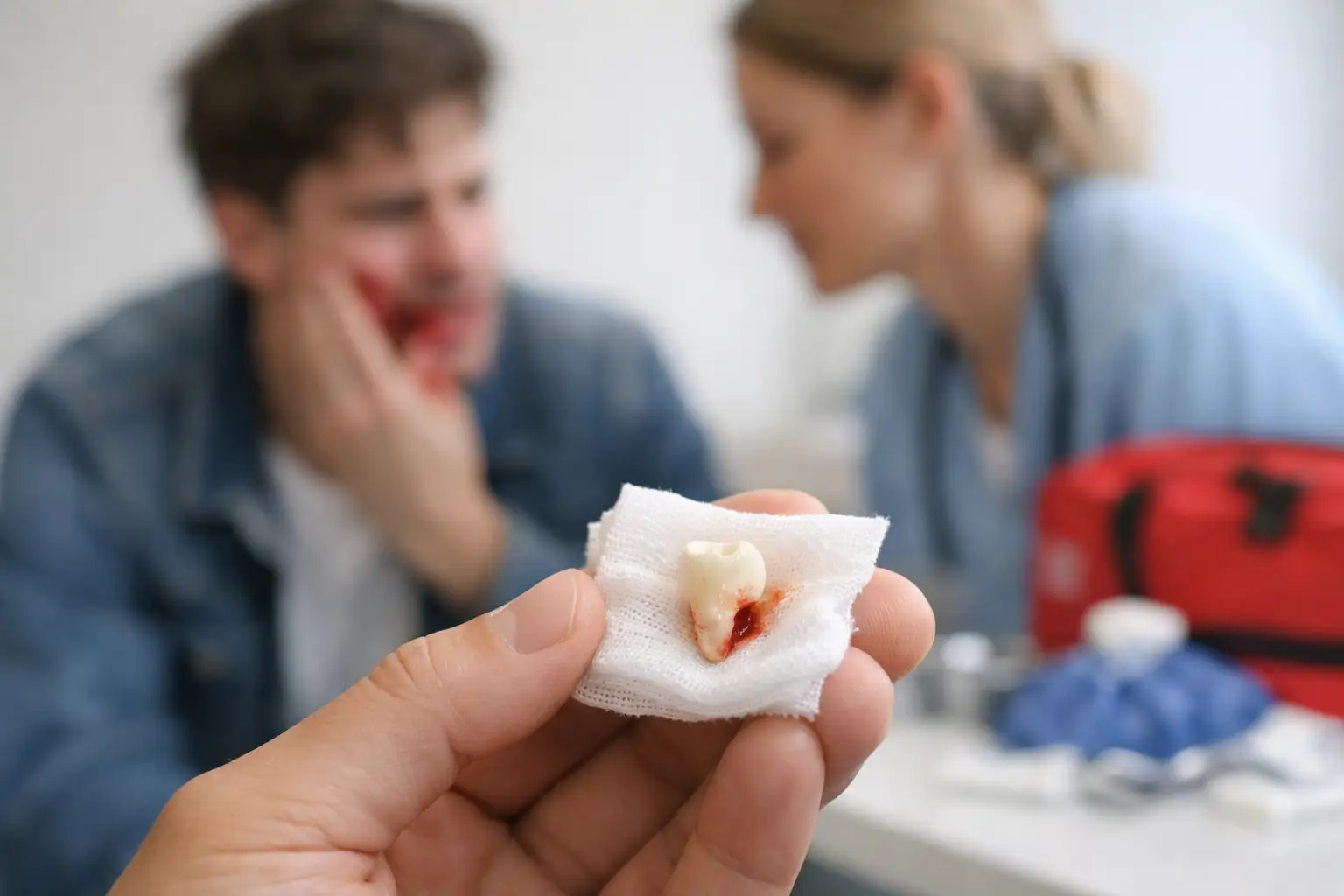
A tooth is on the ground, someone is bleeding, and the next few minutes can feel overwhelming. Knowing how to handle a knocked out tooth can make a meaningful difference in whether a dentist can save it. The goal is simple: protect the tooth’s delicate root cells, control bleeding, and get urgent dental care as quickly as possible.
A knocked-out permanent tooth is a true dental emergency. Call your dentist immediately, even if the tooth looks damaged or you are unsure whether it can be put back in place. Quick, calm action gives the tooth its best chance.
How to Handle a Knocked Out Tooth Step by Step
First, find the tooth. Pick it up only by the crown, which is the white chewing surface normally visible above the gums. Do not touch, scrub, or scrape the root. The root carries fragile living cells that are essential when a dentist attempts to stabilize and save the tooth.
If the tooth is dirty, gently rinse it for a few seconds with milk or saline solution if available. Clean water can be used if nothing else is nearby, but do not soak the tooth, use soap, wrap it in tissue, or brush it clean. Those actions can damage the root surface.
If the injured person is alert and able to cooperate, gently place the tooth back into its socket right away. Make sure it is facing the correct direction, then have them bite softly on clean gauze or a folded clean cloth to help keep it in position. Never force the tooth into place. If it will not slide in easily, stop and keep it moist instead.
For adults and older children with permanent teeth, the best storage option is often the person’s own mouth. Have them hold the tooth between the cheek and gum, taking care not to swallow it. This is not suitable for a young child, someone who is unconscious, or anyone who may accidentally swallow the tooth.
If storing it in the mouth is not safe, place the tooth in cold milk. A tooth-preservation solution, if one is available through a school nurse, athletic trainer, or first-aid kit, is also an excellent option. Saline can work in a pinch. Do not store the tooth in plain water for an extended period, and never let it dry out.
Get to an Emergency Dentist Without Delay
Call an emergency dental office while you are on the way. Ideally, a knocked-out permanent tooth should be assessed and replanted within 30 minutes, although treatment may still be worthwhile after that window. The sooner the tooth is returned to the socket and professionally stabilized, the better the outlook tends to be.
At the office, your dentist will examine the injury, take X-rays as needed, and check for damage to the socket, neighboring teeth, lips, tongue, or jaw. If the tooth can be replanted, it may be gently positioned and secured with a small flexible splint attached to nearby teeth. This support usually remains in place while the bone and surrounding tissues heal.
A follow-up treatment plan matters just as much as the first visit. Depending on the patient’s age, the tooth’s root development, and the time it spent out of the mouth, root canal treatment may be needed later. Regular checks allow your dentist to monitor healing and respond early if infection, root resorption, or other complications develop.
Ashar Dentistry provides emergency care with a clear, patient-centered approach, so families in McKinney and surrounding North Dallas communities can understand what is happening and what comes next during a stressful moment.
Control Bleeding and Protect the Rest of the Mouth
A knocked-out tooth can be accompanied by a cut lip, bruised gum tissue, or a sore jaw. Use clean gauze or a clean cloth to apply gentle, steady pressure to bleeding areas. A cold compress against the outside of the cheek can help limit swelling and discomfort.
For pain relief, follow the label directions for an appropriate over-the-counter medication if it is safe for the injured person. Avoid placing aspirin directly on the gums or tooth socket. It can irritate soft tissue and does not treat the injury.
Go to an emergency room or call 911 rather than relying on a dental visit alone if the person has lost consciousness, is vomiting, seems confused, has severe facial swelling, uncontrolled bleeding, difficulty breathing, or signs of a possible jaw fracture. A fall, sports collision, or car accident may involve injuries beyond the mouth.
It is also wise to ask the medical or dental team whether a tetanus booster is needed, particularly if the accident involved dirt, pavement, or an outdoor surface and vaccinations are not current.
A Baby Tooth Requires Different Care
Do not put a knocked-out baby tooth back into the socket. Replanting a primary tooth can damage the developing permanent tooth underneath it. This is one of the most important differences between a child’s baby tooth and a permanent tooth.
Still, call a dentist promptly. A dental exam can confirm that the entire tooth came out, evaluate the gum and bone, and check whether other teeth were injured. If you cannot find the tooth, the dentist or physician may also need to determine whether it was inhaled or swallowed.
Parents sometimes worry that losing a baby tooth early means their child will automatically need a space maintainer. It depends. The child’s age, which tooth was lost, the amount of space available, and the development of the incoming permanent tooth all affect that decision. Your dentist can explain the most appropriate next step without adding unnecessary treatment.
What Not to Do After a Tooth Is Knocked Out
Well-meaning first aid can accidentally reduce the chance of saving a permanent tooth. Avoid these common mistakes:
- Do not handle the tooth by its root.
- Do not scrub, disinfect, or wrap it in a dry paper towel.
- Do not let it dry out while looking for help.
- Do not delay care because bleeding has stopped or pain seems manageable.
- Do not try to reinsert a baby tooth.
The tooth may look surprisingly intact even when the socket or root has been injured. Likewise, a chipped or cracked tooth that has not fully come out still needs prompt dental attention. Keep any broken pieces, rinse the mouth gently, use a cold compress, and call your dentist for guidance.
Prevention Is Worth Planning For
Not every accident can be prevented, but a custom athletic mouthguard is one of the most effective ways to reduce dental injuries in contact sports and activities with a fall risk. Store the mouthguard in its protective case, clean it after use, and have it checked as children grow or dental treatment changes the fit.
For families, it also helps to save your dentist’s emergency number in your phone and keep a small first-aid kit accessible at home, in the car, or in a sports bag. Include gauze, saline, a cold pack, and a tooth-preservation container if your child plays higher-risk sports.
A knocked-out tooth is frightening, but you do not have to solve every detail at the scene. Protect the tooth, keep it moist, seek urgent care, and let your dental team guide the next step toward a healthy, confident smile.
This article is general dental-health information from Ashar Dentistry in McKinney, TX and is not a substitute for an exam or personalised advice. Questions about your own teeth? Call us or book a visit.