
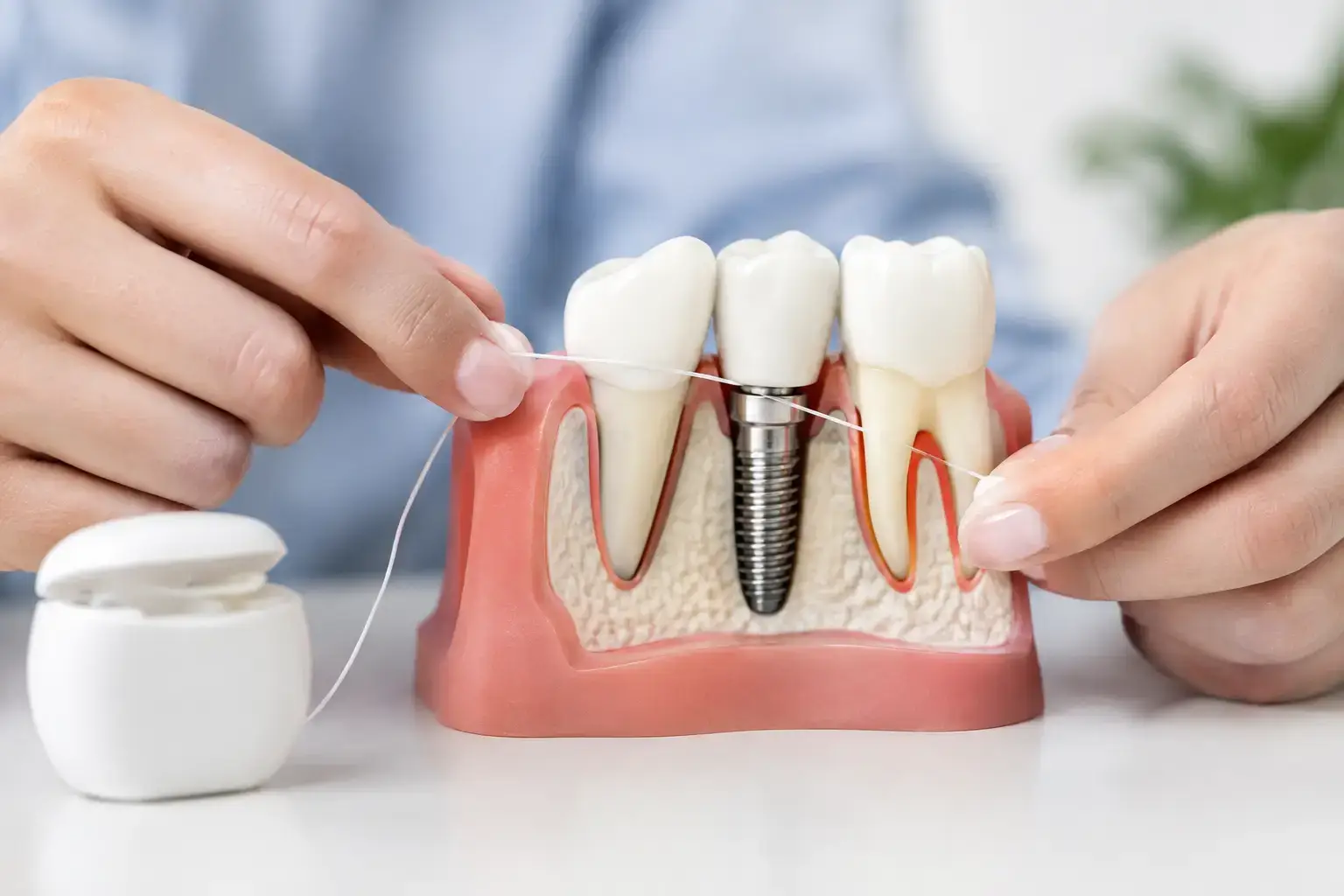
A dental implant may look and feel much like a natural tooth, but the tissues around it need a slightly different kind of attention. Knowing how to floss around implants helps remove plaque where a toothbrush cannot reach, protecting the gum tissue and bone that support your restoration for years to come.
The good news is that implant hygiene does not need to be complicated or uncomfortable. With the right tool, a gentle technique, and regular professional care, most patients can make implant cleaning a simple part of their daily routine.
Why flossing around implants matters
An implant itself cannot develop a cavity. However, bacteria can still collect at the gumline and around the implant crown, bridge, or denture. If plaque is allowed to remain there, it can irritate the gum tissue and lead to inflammation around the implant.
Early inflammation is often called peri-implant mucositis. You may notice bleeding, tenderness, swelling, or an unpleasant taste near the implant. At this stage, treatment and improved home care can often restore healthier gum tissue. When inflammation progresses and begins affecting the bone around an implant, it becomes peri-implantitis, a more serious condition that can threaten the implant’s long-term stability.
Flossing is not about aggressively scraping around the implant. It is about gently disrupting plaque every day before it has time to harden into tartar. A toothbrush cleans the visible surfaces well, but it cannot fully clean between teeth or beneath certain implant restorations.
Before you floss: identify your implant restoration
The best way to clean depends on the type of restoration attached to your implant. A single implant crown usually has a small space between it and the teeth beside it. A fixed implant bridge has connected teeth with a larger space underneath. An implant-supported denture may have areas that require a different combination of brushing, flossing, and water flossing.
If you are not sure what type of restoration you have, do not guess. Your dentist or hygienist can show you exactly where plaque tends to collect and recommend tools that fit your specific restoration. This personalized guidance is especially useful after implant placement, when your gums are still healing, or if you have had gum disease in the past.
How to floss around implants with a single crown
For a single implant crown, the technique is similar to flossing a natural tooth, with a lighter touch. Choose a floss that slides smoothly and does not fray easily. PTFE-style tape floss or another shred-resistant floss is often a comfortable choice because it is less likely to catch on the edge of a crown.
Use an 18-inch piece of floss and wrap most of it around your middle fingers. Guide it gently between the implant crown and neighboring tooth. Do not snap it through the contact point, which can irritate the gum tissue.
Once the floss is in place, curve it into a C-shape against one side of the crown and move it up and down a few times. Then curve it against the neighboring tooth and repeat. Keep the motion gentle and controlled. You are cleaning the side of the crown and the area just beneath the gumline, not trying to force floss deep into the tissue.
Use a clean section of floss for each space. If you feel resistance, persistent snagging, or a rough spot where the floss repeatedly shreds, let your dental team know. A rough crown edge, excess cement, or an issue with the restoration may need attention.
Should you floss below the gumline?
Yes, but only slightly and gently. Floss naturally slips just below the gumline when used correctly. There is no need to push hard or dig deeply. Pressure can injure delicate tissue and make cleaning feel unpleasant.
A small amount of bleeding when you first restart flossing may reflect inflammation from plaque buildup. It should improve with consistent, gentle cleaning. Bleeding that continues beyond a week or two, worsens, or occurs with swelling deserves a call to your dentist.
How to floss around an implant bridge
An implant bridge cannot be flossed between every connected crown in the same way as individual teeth. Instead, the key area is often underneath the bridge, where food particles and plaque can collect between the restoration and gum tissue.
A floss threader or spongy dental floss designed for bridges can make this easier. Guide the stiff end of the threader beneath the bridge, pull the floss through, and gently move it back and forth along the underside of the restoration. Clean around each supporting implant and along the gumline before removing the floss.
Avoid pulling the floss straight upward with force if it catches. Instead, ease it back through the space the way it entered. This is less likely to damage the floss or irritate your gums.
For some patients, a water flosser is a helpful addition when cleaning beneath a bridge. It can rinse out food debris and reach areas that are difficult to access with a toothbrush. However, it works best as part of a complete routine, not as a reason to skip mechanical cleaning with floss or an appropriate interdental brush when your dentist recommends one.
Choosing safe tools for implant cleaning
The right tools should clean effectively without scratching the implant crown, bridge, or surrounding tissue. Your routine may include more than one option, particularly if you have several implants or a full-arch restoration.
Common implant-friendly tools include:
- Shred-resistant tape floss for single implant crowns
- Floss threaders or bridge floss for cleaning beneath fixed bridges
- Soft interdental brushes sized by your dental professional
- Water flossers for flushing around bridges and hard-to-reach spaces
- A soft-bristled manual or electric toothbrush
Not every tool is right for every patient. Interdental brushes can be very effective, but the size matters. One that is too large can traumatize the gum tissue; one that is too small may not clean effectively. Avoid metal or sharp instruments around your implant unless they are specifically recommended by your dental team.
A low-abrasion toothpaste is also a wise choice. Highly abrasive whitening pastes may gradually dull or scratch some restorative materials. If you would like to brighten your natural teeth, ask your dentist which options will complement your implant crown, since an implant restoration will not whiten the way natural enamel does.
A simple daily routine for healthy implants
Consistency matters more than using a long list of products. Brush twice daily for two minutes with a soft brush, paying close attention to the gumline around the implant. Clean between teeth and around the implant once a day using the method recommended for your restoration.
Many people find that flossing before brushing at night works well. Removing plaque and food debris first allows toothpaste to reach cleaner tooth surfaces. Others prefer to floss at another consistent time of day. The best routine is the one you can maintain every day.
If your gums are sensitive, start slowly. It is better to clean gently and thoroughly than to rush through the process with excessive force. If dental anxiety or a previous uncomfortable experience has made you hesitant about cleaning around an implant, ask for a hands-on demonstration at your next appointment. A few minutes of personalized instruction can make home care feel much more manageable.
When to call your dentist
Do not wait for pain before asking for help. Implants can develop problems with few symptoms at first, which is why regular exams and professional cleanings remain essential even when everything feels fine.
Contact your dental office if you notice bleeding that does not improve, persistent bad breath or taste, redness, swelling, pus, a loose-feeling crown, discomfort when biting, or a change in how your implant restoration fits. These signs do not always mean implant failure, but they should be evaluated promptly.
At Ashar Dentistry, we take time to help patients understand their implant care routine, not simply hand them instructions and send them home. Your maintenance visits give us a chance to monitor your gums, bite, restoration, and the bone supporting your implant with the attention long-lasting results require.
Your implant was designed to restore function and confidence. A few calm, careful minutes of cleaning each day, paired with regular dental care, can help keep that investment feeling as natural and dependable as possible.
This article is general dental-health information from Ashar Dentistry in McKinney, TX and is not a substitute for an exam or personalised advice. Questions about your own teeth? Call us or book a visit.