
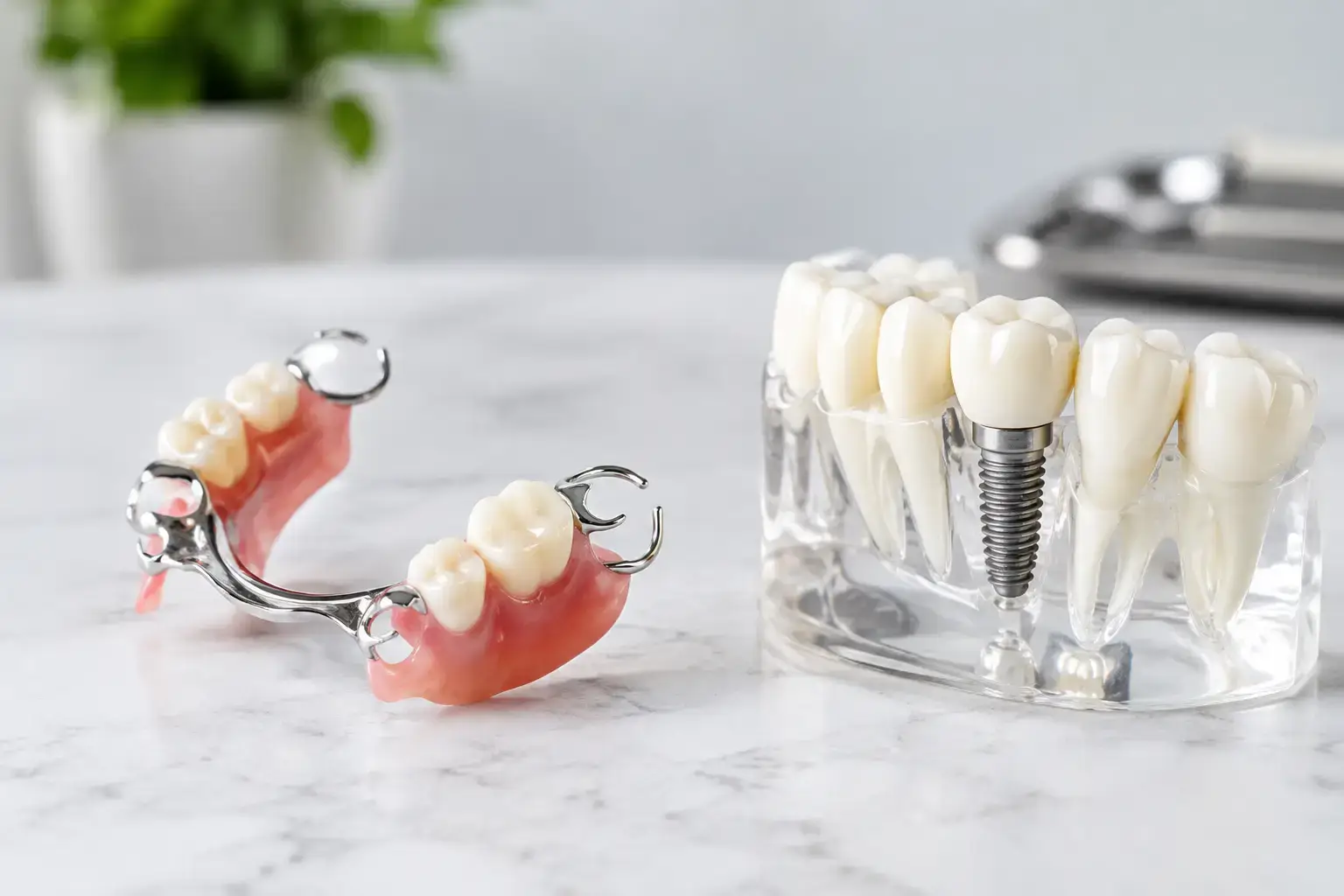
When you are missing several teeth, the decision between partial dentures vs implants can affect more than your smile. It can change how confidently you eat, how clearly you speak, how you care for your mouth, and how well your remaining teeth and jawbone are protected over time. The right answer is personal. It depends on your oral health, goals, timeline, budget, and the kind of day-to-day experience you want.
A thoughtful consultation should never feel like pressure to choose the most involved treatment. It should give you a clear picture of each option, what it can accomplish, and what it will require from you.
What Is a Partial Denture?
A partial denture is a removable appliance designed to replace one or more missing teeth while fitting around the natural teeth that remain. It typically includes replacement teeth attached to a gum-colored base. Depending on the design, it may use small clasps, precision attachments, or flexible material to stay in place.
Modern partial dentures can be far more natural-looking and comfortable than many people expect. They can restore visible gaps, support your facial appearance, and help you chew more effectively. Because they are removable, you take them out at night and clean them separately from your natural teeth.
Partial dentures are often a practical choice for patients who need an efficient solution, are missing teeth in different areas of the mouth, or are not ready for surgical treatment. They may also be used as a transitional option while a patient prepares for a more permanent restoration.
What Are Dental Implants?
A dental implant replaces a missing tooth root with a small titanium post placed in the jawbone. Once the implant has healed and integrated with the bone, it can support a custom crown, bridge, or a larger implant-supported restoration.
For a single missing tooth, an implant with a crown can replace the tooth without relying on the neighboring teeth for support. When several teeth are missing next to one another, implants may support a bridge. In cases of more extensive tooth loss, a carefully planned implant solution may stabilize a removable denture or support a fixed full-arch restoration.
Implants are designed to function much like natural tooth roots. They are fixed in place, brushed like natural teeth, and do not need to be removed for cleaning. For many patients, that stability is one of their biggest advantages.
Partial Dentures vs Implants: The Everyday Difference
The most noticeable difference is how each option feels during ordinary activities. A well-made partial denture can be comfortable and functional, but it remains a removable appliance. It may take time to adapt to speaking and chewing with it, especially at first. Some patients notice movement with certain foods or feel more aware of the appliance in their mouth.
Implants are anchored in the jawbone, so they generally offer a more stable chewing experience. Many patients appreciate being able to eat, laugh, and speak without worrying that a restoration may shift. An implant-supported solution can also feel more natural because it does not cover the palate or rest against the gums in the same way a removable partial does.
That said, comfort is not only about the restoration. A partial denture that fits poorly can rub the gums or create sore spots, while an implant procedure requires healing time and good home care. The better choice is the one that is properly planned, precisely fitted, and realistic for your needs.
Protecting Bone and Remaining Teeth
After a tooth is lost, the jawbone in that area no longer receives the stimulation it once got from the tooth root. Over time, the bone can shrink. This can affect facial support, bite alignment, and the fit of future restorations.
Dental implants help stimulate the jawbone, which may reduce bone loss in the area of the missing tooth. This is a meaningful long-term benefit, particularly for patients who have recently lost a tooth and want to preserve as much healthy bone as possible.
Partial dentures replace the visible portion of teeth but do not replace the roots beneath the gumline. They do not provide the same bone stimulation as implants. In addition, some partial dentures rely on adjacent teeth for support. Those teeth must be monitored carefully to ensure clasps, pressure, and plaque buildup are not affecting their health.
This does not make a partial denture a poor choice. It simply means regular exams, professional cleanings, and adjustments matter. The goal is to keep the appliance fitting properly while protecting the teeth that support it.
Cost and Treatment Timeline
For many patients, cost is a major factor in choosing between partial dentures and implants. A partial denture generally has a lower initial cost and can often be completed more quickly. This can make it an appealing option when you need to restore missing teeth soon or want to spread treatment into phases.
Implants involve surgery, detailed planning, healing time, and custom restorations. As a result, the initial investment is usually higher. Treatment can take several months, although the timeline varies based on the number of teeth being replaced, bone quality, whether an extraction is needed, and whether bone grafting is recommended.
Looking only at the starting cost can be misleading. Partial dentures may eventually need relines, repairs, or replacement as the shape of the gums and bone changes. Implant restorations also need maintenance and may need repair or replacement over the years, but the implant itself can be a long-lasting foundation when cared for well.
If cost is your main concern, ask for a treatment plan that explains both the immediate and long-term considerations. At Ashar Dentistry, patients can also discuss available third-party financing options to make care feel more manageable.
Who May Be a Good Candidate for Implants?
Many adults can be candidates for dental implants, even if they have been told in the past that they are not. The first step is an evaluation of your gums, jawbone, bite, medical history, and the condition of your remaining teeth.
Healthy gums and sufficient bone are helpful, but limited bone does not automatically rule out implants. Some patients may benefit from bone grafting or a different implant treatment design. Medical conditions such as uncontrolled diabetes, heavy tobacco use, or certain medications can affect healing and require careful planning.
Implants may be especially worth considering if you want a fixed restoration, dislike the idea of removing a denture, have a healthy enough foundation for treatment, and are focused on preserving bone in the missing-tooth area. They can also be a strong option when a single missing tooth would otherwise require a traditional bridge that alters neighboring teeth.
When a Partial Denture May Be the Better Choice
A partial denture can be an excellent solution when surgery is not appropriate, when you need teeth replaced on a shorter timeline, or when you prefer a lower initial investment. It can also work well when there are multiple gaps in different parts of the mouth that would require several implants to restore individually.
Some patients simply prefer a removable option. Others want to restore their smile and chewing ability now while taking time to consider implants later. There is no one-size-fits-all treatment, and choosing a partial denture is not settling for less when it matches your health needs and priorities.
A custom partial should be designed with your bite, appearance, and comfort in mind. Follow-up visits are part of successful treatment, especially during the adjustment period. If the appliance rubs, feels loose, or changes the way your teeth meet, it should be evaluated rather than tolerated.
How to Make a Confident Decision
The best choice usually becomes clearer after a comprehensive exam and conversation. Your dentist can assess the areas of tooth loss, take necessary imaging, evaluate the health of your supporting teeth and gums, and explain what each path would look like for your specific smile.
It helps to consider a few practical questions. Do you want a fixed solution or are you comfortable with a removable appliance? Is preserving jawbone a priority? Do you need to replace teeth quickly? Are you planning for the lowest initial cost, the longest-term value, or a phased approach that balances both?
You do not have to make the decision alone or understand every clinical detail before your appointment. A clear treatment discussion should leave you knowing what is possible, what is recommended, and why. Replacing missing teeth is not just about filling a space. It is a chance to choose a solution that supports your health, comfort, and confidence for the years ahead.
This article is general dental-health information from Ashar Dentistry in McKinney, TX and is not a substitute for an exam or personalised advice. Questions about your own teeth? Call us or book a visit.