
A denture can look clean at a glance while still holding plaque, food particles, and odor-causing bacteria in the small spaces around the teeth and along the gum-colored base. A consistent routine protects more than the appearance of your smile. Knowing how to clean dentures properly can help your appliance feel fresher, reduce irritation, and support the health of the gums, tongue, and any remaining natural teeth.
The good news is that daily denture care is straightforward. The key is using gentle tools and the right cleanser. Dentures are durable, but they are not natural enamel. Toothpaste, hot water, and harsh household cleaners can scratch, warp, or weaken the material over time.
How to Clean Dentures Every Day
Most full and partial dentures should be removed and cleaned at least once a day, ideally before bed. If you use adhesive, cleaning is especially important because adhesive residue can trap food and bacteria against the appliance and your gums.
A simple daily routine takes only a few minutes:
- Rinse your dentures after eating. Remove them carefully and rinse away loose food particles under cool or lukewarm running water. Avoid hot water, which can change the shape of acrylic dentures.
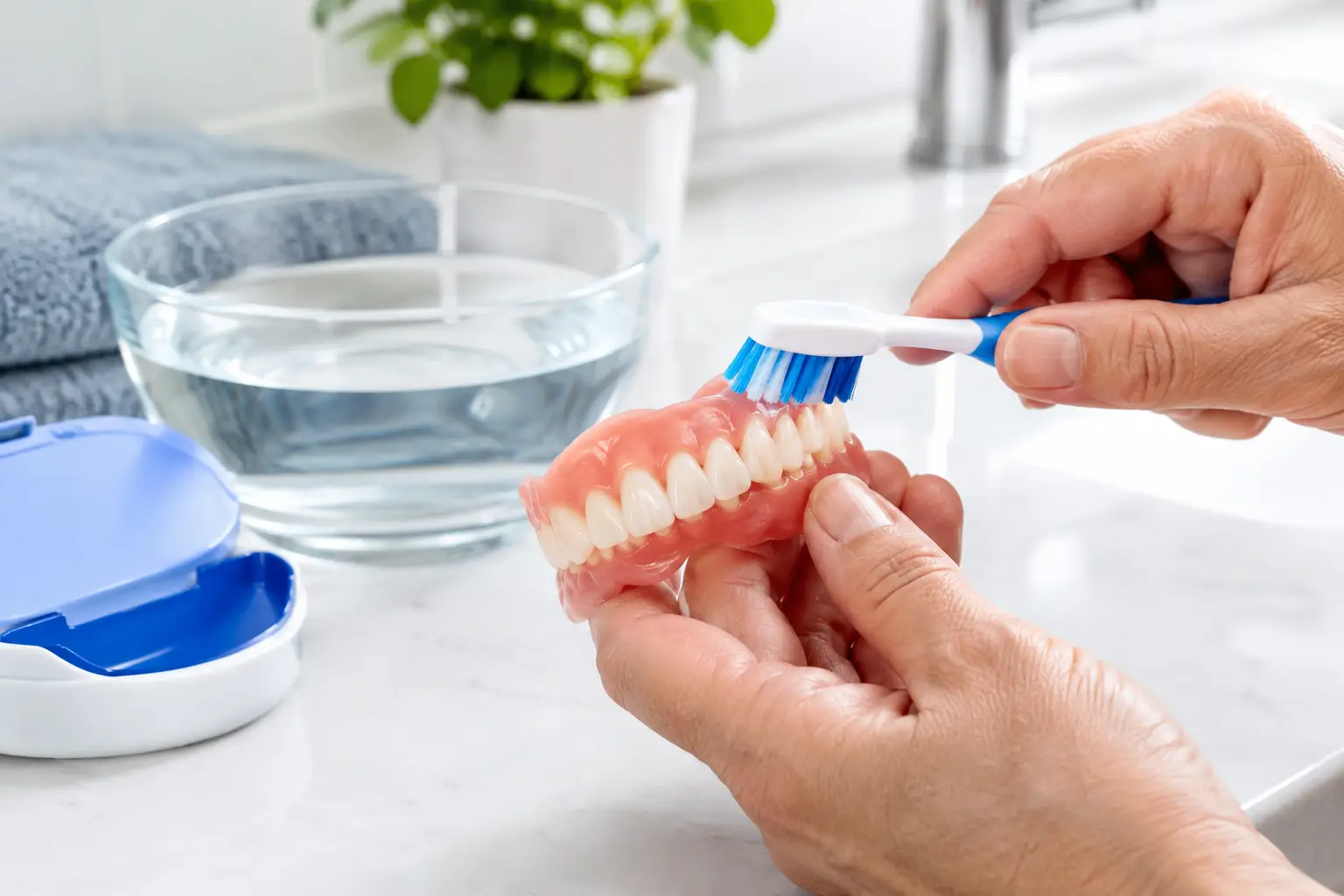
- Brush them with a soft denture brush. Use a brush designed for dentures or a very soft toothbrush, along with a nonabrasive denture cleanser. Brush every surface, including the teeth, the gum-colored base, and the areas that rest against your gums.
- Soak them as directed. Place dentures in a denture-cleaning solution or plain water when they are not being worn. Follow the product directions for soak time. Never use bleach unless your dentist specifically tells you it is safe for your appliance.
- Rinse thoroughly before putting them back in. Cleaning solutions are not meant to be swallowed. Rinse your dentures well with water before wearing them again.
It also helps to clean over a folded towel or a sink partly filled with water. Dentures can crack if they are dropped on a hard countertop or into an empty sink.
Why Regular Toothpaste Is Not the Best Choice
Toothpaste is made for natural tooth enamel, which is much harder than the acrylic and resin materials used in many dentures. Even toothpaste that feels smooth can be abrasive enough to create tiny scratches. Those scratches may collect stains and bacteria, making dentures harder to keep clean over time.
Skip stiff-bristled brushes, whitening toothpaste, baking soda scrubs, and household cleaning powders for the same reason. A denture cleanser and soft brush are safer choices. If you are unsure about a product, bring it to your dental appointment and ask whether it is appropriate for your specific denture.
Clean Your Mouth, Not Just Your Dentures
Removing your dentures does not mean oral care is finished for the day. Plaque and bacteria can still collect on your gums, tongue, palate, and any remaining teeth. Gently brush your tongue, gums, and the roof of your mouth with a soft toothbrush before placing dentures back in or before going to sleep.
If you have a partial denture, brush and floss your natural teeth carefully. The teeth that support a partial denture need consistent protection from cavities and gum disease. Your dentist may recommend fluoride toothpaste, an interdental brush, or another tool based on where the partial rests and how your remaining teeth are positioned.
If your gums feel sore, red, or tender, do not assume that discomfort is simply part of wearing dentures. Irritation can be caused by plaque buildup, an uneven bite, a rough spot, or a denture that no longer fits as it should.
Should You Soak Dentures Overnight?
For many patients, taking dentures out at night gives the gum tissues time to rest. Soaking also helps keep acrylic dentures from drying out and losing their shape. However, the best overnight routine depends on the type of denture you wear and your individual oral health needs.
Some patients may be instructed to wear their dentures for a period of time after extractions or another procedure. Others may have implant-supported dentures with different cleaning requirements. Follow the plan provided by your dentist rather than relying on general advice alone.
Never leave dentures wrapped in a dry napkin. This is an easy way for them to be accidentally thrown away. Store them in a labeled denture container filled with water or an appropriate soaking solution, safely out of reach of children and pets.
How to Remove Stains and Denture Odor
Coffee, tea, red wine, tobacco, and deeply colored foods can gradually stain dentures. Daily brushing and regular soaking will prevent many stains, but some discoloration can become embedded in the material. If stains remain after proper cleaning, avoid trying to scrub them away aggressively. Hard brushing can damage the surface and make future staining worse.
Persistent odor is another reason to schedule a dental visit. Odor can result from bacterial buildup, but it may also mean that the appliance has small cracks, worn surfaces, or areas that are difficult to clean thoroughly. Professional cleaning can remove deposits without damaging your denture, and your dental team can inspect it for early signs of wear.
Do not use boiling water, bleach, alcohol-based cleaners, or dishwasher cycles to remove stains. These methods can discolor metal components, weaken acrylic, or alter the fit of your denture. A denture that has warped even slightly may rub your gums or affect how you bite and speak.
Caring for Implant-Supported Dentures
Implant-supported dentures can offer greater stability and comfort, but they still require daily attention. The denture itself must be cleaned, and so must the tissues around the implants. Plaque around implant attachments can lead to inflammation and compromise the long-term health of the supporting bone.
Some implant dentures are removable, while others are fixed in place. A removable implant overdenture may need to be taken out daily so you can clean the attachments, underside of the denture, and gums. A fixed implant bridge or denture is cleaned while in the mouth using tools such as a soft toothbrush, floss threader, water flosser, or interdental brush, depending on its design.
Because implant restorations vary, personalized instructions matter. At Ashar Dentistry, we help patients understand exactly how to care for their restoration so they can protect the investment they have made in their smile.
When Dentures Need Professional Attention
Dentures do not last forever without maintenance. Your jawbone and gum tissues naturally change over time, which can make a once-comfortable denture feel loose, cause clicking, or create sore spots. Relining, adjustment, repair, or replacement may be needed even when the denture looks intact.
Schedule an appointment if your dentures crack, chip, feel loose, suddenly fit differently, cause persistent soreness, or make it difficult to chew. Also call if you notice bleeding gums, white patches, burning, frequent bad breath, or a change in how your bite meets. Do not try to repair dentures yourself with glue from a hardware or craft store. These products are not safe for your mouth and can make a professional repair more difficult.
Regular dental visits remain valuable for people with full dentures. Your dentist can examine your gums, screen for oral health concerns, evaluate denture fit, and remove buildup that home care may miss. For patients with partials, implants, or natural teeth, these visits are essential for protecting the structures that support your smile.
A clean denture should feel comfortable, look natural, and let you speak and eat with confidence. If yours is becoming harder to clean or less comfortable to wear, a simple conversation with your dental team can be the first step toward a healthier, more secure fit.
This article is general dental-health information from Ashar Dentistry in McKinney, TX and is not a substitute for an exam or personalised advice. Questions about your own teeth? Call us or book a visit.