
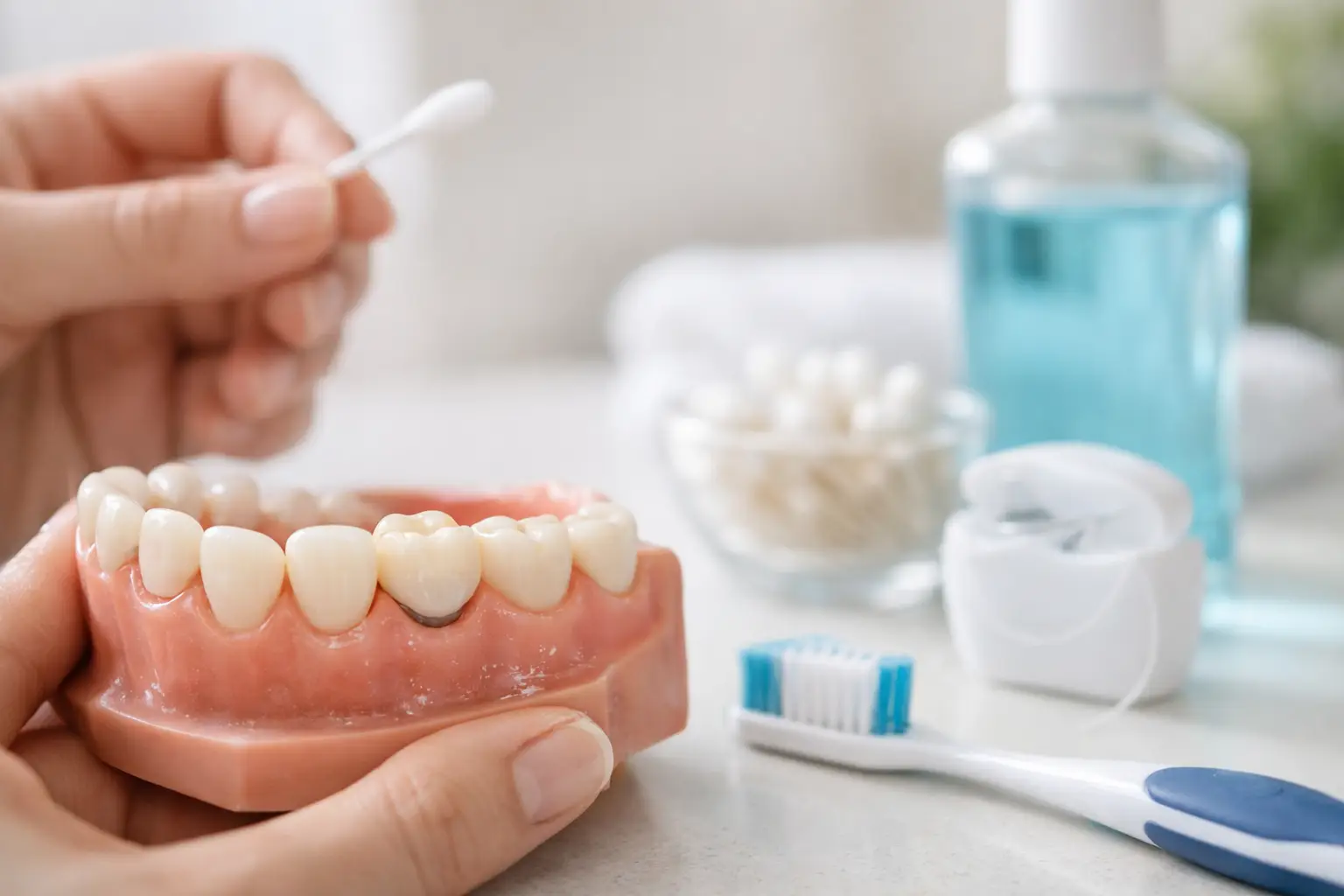
A temporary crown is a short-term protector, but it has an important job. It covers a prepared tooth while your permanent crown is being made, helping shield the tooth from sensitivity, food, and everyday pressure. If you are wondering how to care for a temporary crown, the goal is simple: keep it clean, keep it in place, and let your dental team know quickly if anything changes.
Temporary crowns are designed to be worn for only a limited time. They are usually made from resin or acrylic and secured with temporary cement, which is intentionally easier to remove than the cement used for a final crown. A few small adjustments to meals and home care can make the time between appointments much more comfortable.
Why Temporary Crown Care Matters
Your dentist may place a temporary crown after preparing a tooth for a permanent restoration, following a root canal, or while completing a more involved restorative treatment plan. The tooth beneath it has been shaped to create room for the final crown, so it is more vulnerable if the temporary comes loose or breaks.
A temporary crown also helps maintain the space around the tooth. Without it, nearby teeth can shift slightly, the bite can change, and the permanent crown may no longer fit as precisely as planned. Caring for it well supports a smoother final appointment and a durable, natural-looking result.
How to Care for a Temporary Crown Every Day
Brush gently and keep the gumline clean
Continue brushing twice daily with a soft-bristled toothbrush and fluoride toothpaste. Clean around the temporary crown carefully, especially near the gumline, where plaque can collect. Gentle brushing will not normally loosen a well-cemented temporary crown, and skipping oral hygiene can irritate the gums before your next visit.
You can still use an alcohol-free mouth rinse if it is comfortable for you. If the tooth is sensitive after preparation, use lukewarm water rather than very hot or ice-cold water until the sensitivity settles.
Floss with a different motion
Flossing matters, but the technique is important. Slide floss gently between the temporary crown and the neighboring tooth, then pull the floss out through the side instead of lifting it straight back up. Pulling upward can catch the edge of the temporary crown and dislodge it.
If your gums are tender after the procedure, a little tenderness or light bleeding for a short time can happen. Persistent bleeding, swelling, or worsening pain deserves a call to your dental office.
Chew on the other side when possible
A temporary crown is not meant to handle the same forces as your final restoration. For the first day, stick to softer foods while any numbness wears off and the tooth adjusts. After that, chewing on the opposite side of your mouth whenever practical reduces stress on the temporary crown.
You do not have to live on soup, but take smaller bites and chew thoughtfully. This is especially helpful if the temporary is on a molar, where chewing pressure is naturally stronger.
Foods to Avoid With a Temporary Crown
The biggest concern is food that can pull, crack, or wedge beneath the crown. Sticky foods are often the most likely to loosen temporary cement. Avoid chewing gum, caramel, taffy, gummy candy, and similar foods until your permanent crown is placed.
Hard foods can also cause trouble. Ice, popcorn kernels, hard candy, nuts, and crusty bread can crack a temporary crown or put excessive pressure on the tooth underneath. It is also wise to avoid biting directly into firm foods such as apples, raw carrots, corn on the cob, or thick sandwiches with the temporary crown. Cut them into smaller pieces instead.
Very chewy foods, including tough steak, bagels, and dense granola bars, can be difficult for a temporary crown as well. This does not mean every meal has to feel restrictive. Eggs, fish, yogurt, pasta, cooked vegetables, rice, tender chicken, and smoothies are usually comfortable choices while you wait for your final crown.
What to Do If Your Temporary Crown Feels Different
A temporary crown should feel reasonably comfortable once numbness has faded. It may feel slightly different from your natural tooth, but it should not feel dramatically high when you bite or cause sharp pain each time your teeth come together.
Some mild temperature sensitivity is common, particularly in the first few days. Sensitivity that is getting better is generally reassuring. Sensitivity that becomes stronger, lingers, wakes you at night, or makes it hard to eat should be evaluated.
Call your dentist if you notice that the crown is rocking, feels loose, has a rough or sharp edge, or changes your bite. Do not wait until your permanent-crown appointment if something feels wrong. A simple adjustment can protect your tooth and prevent a larger inconvenience later.
If the Temporary Crown Comes Off
Temporary crowns occasionally come loose, even when patients are careful. This is not a reason to panic, but it is a reason to act promptly. Save the crown if you can, rinse it gently with water, and keep it in a clean container. Contact your dental office as soon as possible for instructions and an appointment.
Do not use household glue, craft adhesive, or super glue to put a crown back on. These materials are not safe for use in the mouth and can make professional treatment more difficult. In some situations, a dental team may advise an over-the-counter temporary dental cement as a very short-term measure, but only follow that guidance after speaking with the office.
Until you are seen, keep the area clean and avoid chewing on that side. If the exposed tooth is sensitive, avoid extreme temperatures and sugary foods. Bring the temporary crown with you, even if it looks cracked, because your dentist can determine whether it can be re-cemented or needs to be replaced.
Seek prompt care if you have severe pain, facial swelling, fever, trouble swallowing, or a broken tooth edge that is cutting your tongue or cheek. These symptoms can indicate a problem that should not wait.
Keep Your Final Crown Appointment
The permanent crown is the long-term restoration designed for your bite, function, and appearance. It is made to fit your tooth precisely and is bonded with durable dental cement. Delaying the placement appointment can increase the chance that the temporary crown fails or that the teeth shift enough to affect the final fit.
At Ashar Dentistry, we want every stage of restorative care to feel clear and manageable, not intimidating. If you are unsure whether a sensation is normal or your temporary crown has changed, calling for guidance is always the right move. A quick question now can help protect the comfort, health, and lasting result of your smile.
Treat your temporary crown with a little extra care, listen to what your mouth is telling you, and keep your follow-up visit on schedule. That thoughtful attention helps set the stage for a final crown that feels secure, comfortable, and like it belongs.
This article is general dental-health information from Ashar Dentistry in McKinney, TX and is not a substitute for an exam or personalised advice. Questions about your own teeth? Call us or book a visit.