
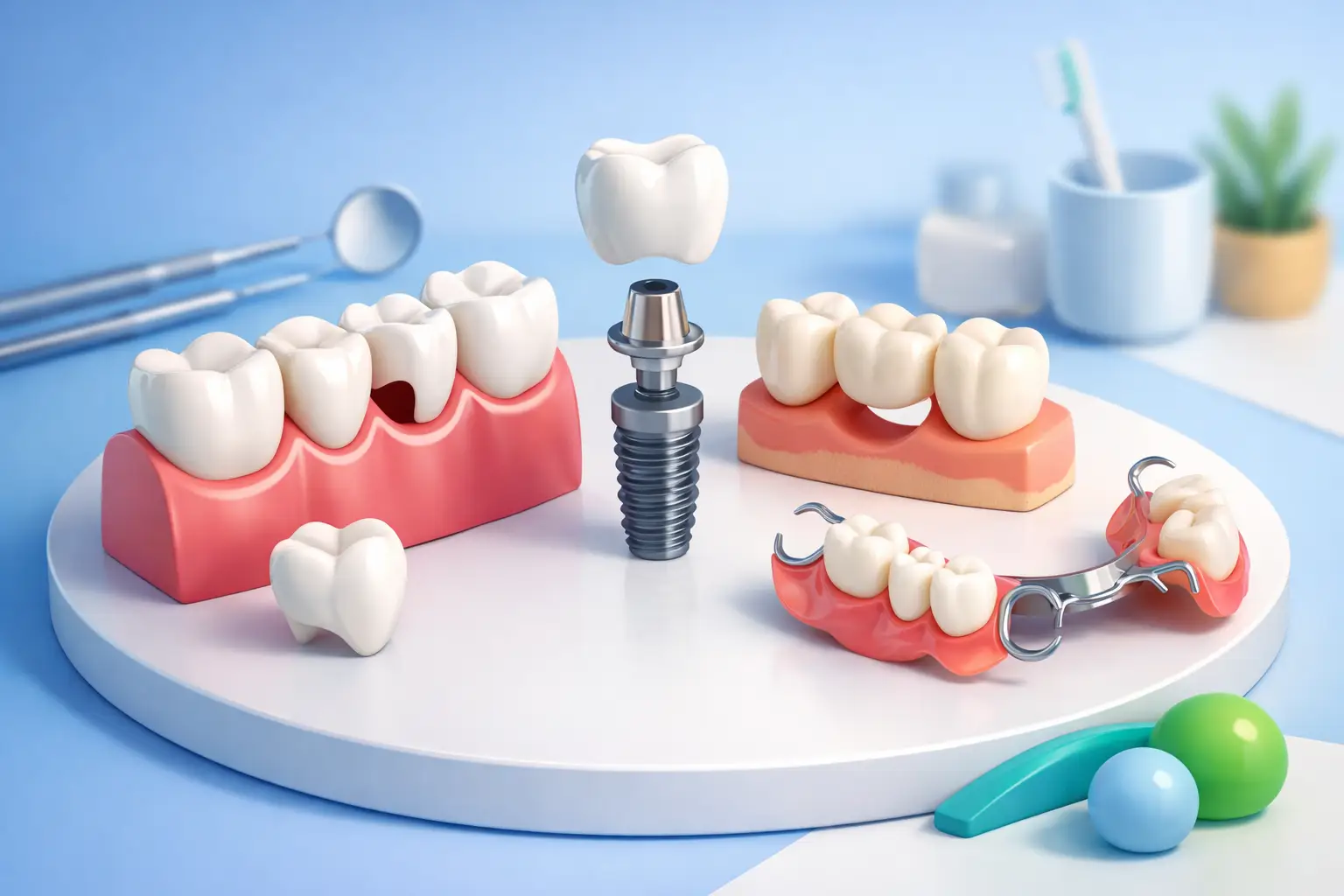
A missing tooth can change more than the way your smile looks in photos. It can make chewing less comfortable, affect the way neighboring teeth fit together, and leave you wondering whether treatment will be complicated or costly. The best options for missing teeth depend on how many teeth are missing, where they are located, the health of your gums and jawbone, and what matters most to you day to day.
There is no one-size-fits-all answer. A well-planned replacement should feel natural, support your oral health, and fit your timeline and budget. The first step is a thoughtful consultation where you can understand your choices without pressure.
Best Options for Missing Teeth: Start With the Right Questions
Before choosing a restoration, your dentist will look beyond the visible space. They will evaluate the surrounding teeth, your bite, gum health, bone levels, and any signs of decay or infection. This helps determine which option can provide a stable, lasting result.
Your lifestyle matters, too. A single missing front tooth may call for a different approach than several missing back teeth. Someone who wants the closest feel to a natural tooth may prioritize an implant, while a patient replacing multiple teeth may prefer a removable solution. There can also be practical considerations, including healing time, insurance coverage, and financing.
Why replacing a tooth can protect your smile
When a tooth is lost, the teeth beside it can gradually shift toward the open space. The opposing tooth may move out of position, and the jawbone in that area can begin to lose density over time. These changes do not happen overnight, but addressing a missing tooth sooner can often make treatment more straightforward.
Replacing a tooth can also restore the ability to chew comfortably and speak with confidence. For many patients, the emotional benefit matters just as much. A complete smile can make everyday conversations, meals, and family photos feel easier again.
Dental Implants: The Most Tooth-Like Option
A dental implant replaces the root of a missing tooth with a small, biocompatible post placed in the jawbone. After the area heals, a custom crown, bridge, or denture is attached to the implant. Because the restoration is anchored in the bone, it does not rely on neighboring teeth for support.
For a single missing tooth, an implant with a custom crown is often the most natural-looking and stable choice. It can restore strong chewing function and help preserve bone in the area. With good home care and regular dental visits, implants are designed to be a long-term solution.
Implants do require adequate bone support and healthy gums. If bone volume has decreased after an extraction, bone grafting may be recommended before or during implant treatment. This adds time to the process, but it can create a stronger foundation for the final result.
The main trade-offs are surgical treatment, healing time, and a higher upfront investment than some alternatives. For many patients, those considerations are balanced by the comfort, durability, and natural feel of an implant-supported tooth.
Implant-supported bridges and dentures
Implants are not only for replacing one tooth. Several implants can support a fixed bridge when multiple teeth are missing. They can also secure a full or partial denture, reducing the movement that some people experience with traditional removable dentures.
An implant-supported denture may be removable for cleaning or fixed in place, depending on the treatment design. This option can be especially meaningful for patients who have struggled with loose dentures, difficulty chewing, or concerns about their denture shifting while they speak.
Dental Bridges: A Fixed Solution Without Implant Surgery
A dental bridge fills a gap by attaching a replacement tooth to crowns placed over the teeth on either side. It stays in place, looks natural when carefully designed, and usually takes less time to complete than implant treatment.
A bridge can be an excellent choice when the teeth beside the space already need crowns because of large fillings, fractures, or extensive wear. It may also be appropriate for patients who are not candidates for implant placement or would rather avoid a surgical procedure.
The consideration is that a traditional bridge requires reshaping the supporting teeth for crowns, even if those teeth are otherwise healthy. Bridges also do not stimulate the jawbone beneath the missing tooth the way an implant does. Still, with quality materials, a precise fit, and consistent hygiene, a bridge can provide a beautiful and dependable result.
Partial Dentures: A Flexible Choice for Several Missing Teeth
A removable partial denture replaces one or more teeth while using the remaining teeth for support. Modern partials can be made with discreet clasps and natural-looking replacement teeth, giving patients a practical way to restore a larger section of their smile.
This option is generally less invasive and often more affordable upfront than placing several implants. A partial denture can also be used as a temporary restoration while a patient heals after extractions or prepares for more extensive treatment.
Because it is removable, it requires daily cleaning and may need adjustments as the shape of the gums and bone changes. Some patients need a short adjustment period as they learn to eat and speak with the appliance. A carefully fitted partial should feel secure, but it will not feel exactly like a fixed tooth replacement.
Full Dentures: Restoring a Complete Smile
When all teeth in an upper or lower arch are missing, a complete denture can restore facial support, speech, appearance, and the ability to eat a broader range of foods. Today's dentures are customized for the shape of your mouth, your bite, and the appearance you want for your smile.
Conventional dentures rest on the gums and are removable. They can be an efficient solution for full-arch tooth loss, particularly when patients want to avoid surgery or need to work within a limited budget. Denture adhesives may improve stability for some people, although a well-fitting denture should be evaluated regularly as the mouth changes.
For patients who want added security, implant-supported dentures are often worth discussing. Even a limited number of implants can improve retention and reduce the pressure placed on the gums. The right choice depends on bone health, medical history, personal preferences, and the level of stability you want.
What About a Temporary Tooth Replacement?
A temporary solution can protect your appearance and comfort while a permanent restoration is being planned. Depending on your situation, this may include a temporary partial denture, a temporary bridge, or a temporary crown after implant placement.
Temporary treatment is not simply cosmetic. It can help maintain space, support your ability to speak, and make the transition after an extraction less stressful. Your dentist should explain how long the temporary option is expected to last and what to avoid while wearing it.
How to Choose With Confidence
The best treatment plan is one you understand. During your consultation, ask how each option will affect your bite, how long it should last with proper care, whether it can be repaired in the future, and what maintenance it requires. It is also reasonable to ask for a clear sequence of appointments and a transparent estimate before treatment begins.
At Ashar Dentistry, the goal is to make that process feel organized and personal, not overwhelming. Advanced imaging, clear treatment planning, and a comfort-conscious approach help patients understand their choices and move forward at a pace that feels manageable. For more complex cases, planning your restorative care under one roof can also make communication and follow-up simpler.
If a tooth has recently been lost, or you have been living with a gap for years, you do not have to decide alone. A consultation can clarify what your smile needs now and what will support it well in the years ahead. Taking that first step can turn a lingering concern into a treatment plan built around your comfort, health, and confidence.
This article is general dental-health information from Ashar Dentistry in McKinney, TX and is not a substitute for an exam or personalised advice. Questions about your own teeth? Call us or book a visit.