
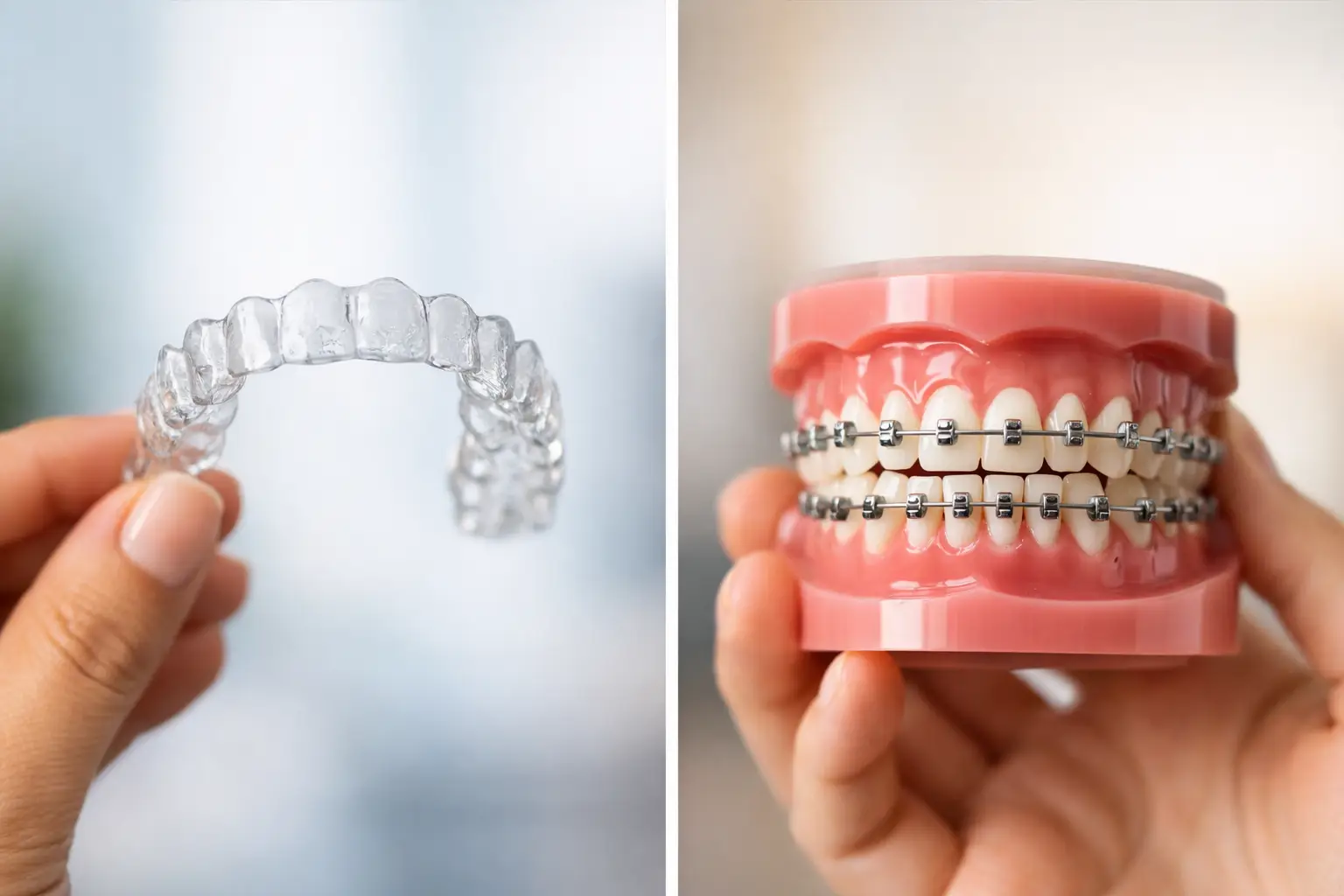
A straighter smile can change more than photographs. It can make cleaning easier, improve how your teeth meet, and help you feel less self-conscious in a meeting, at dinner, or when you laugh. When patients search Invisalign versus braces adults, they are usually asking a practical question: Which option will give me a healthy, confident result without making everyday life harder?
The answer is personal. Clear aligners and braces can both create excellent results for adult patients, but they work differently and ask different things of you during treatment. The best choice is not always the least visible one. It is the option that fits your bite, goals, schedule, budget, and ability to follow the plan consistently.
Invisalign Versus Braces for Adults: The Core Difference
Invisalign treatment uses a series of custom, removable clear aligners. Each set applies gentle, planned pressure to move teeth in small stages. You wear the aligners most of the day, remove them to eat and brush, and switch to the next set according to your dentist's instructions.
Traditional braces use brackets bonded to the teeth and a wire that is adjusted over time. Because braces stay in place, they deliver consistent force around the clock. They are highly versatile and can correct many alignment and bite concerns, including more complex cases.
Both options begin with a detailed examination. Your dentist evaluates tooth position, gum health, jaw relationship, existing dental work, and the way your bite functions. A treatment recommendation should be based on those clinical details, not on a one-size-fits-all preference.
Why Many Adults Prefer Clear Aligners
For adults in McKinney and surrounding North Dallas communities, clear aligners are often appealing because they are discreet. The smooth, transparent trays are much less noticeable than brackets and wires, which can be especially helpful for professionals, parents, and anyone who wants orthodontic treatment to stay relatively private.
Removability is another meaningful advantage. You can take aligners out for meals, coffee, special occasions, and daily brushing and flossing. That means there are no food restrictions during treatment. You can enjoy popcorn, crunchy vegetables, and a favorite restaurant meal without worrying about damaging a bracket.
Clear aligners also tend to feel gentler against the lips and cheeks. Some pressure is expected when teeth are moving, particularly with a new tray, but there are no metal edges or wires to irritate soft tissue. For patients who already feel anxious about dental care, that can make orthodontic treatment feel more manageable.
The trade-off is responsibility. Aligners generally need to be worn 20 to 22 hours each day. Taking them out for long stretches, forgetting to put them back after meals, or frequently losing trays can slow progress and affect results. Invisalign is convenient, but it is not passive treatment. It works best for adults who are ready to make it part of their routine.
Clear aligners can be a strong fit when
Clear aligners are often well suited for mild to moderate crowding, spacing, relapse after previous orthodontic treatment, and many bite concerns. They may also work for more involved cases when treatment is carefully planned and monitored.
However, not every case is ideal for aligners alone. Significant tooth rotations, severe bite discrepancies, certain jaw-related issues, and teeth that need substantial vertical movement may be more predictable with braces or may require a combination approach. An experienced provider can explain what is realistic before you commit.
When Braces May Be the Better Choice
Braces remain an excellent orthodontic option for adults, and choosing them does not mean compromising on results. Their greatest strength is control. Since brackets are bonded to the teeth, braces can apply continuous force without relying on wear-time habits. This can be particularly valuable when a patient has a complex bite, pronounced crowding, or teeth that need more precise movement.
For some adults, braces are also the simpler choice from a routine standpoint. You do not need to remember to reinsert aligners after lunch or keep track of trays when traveling. Once braces are placed, the treatment is always working.
The adjustment period is real. Brackets can rub the inside of the mouth at first, and wires occasionally need attention. Food choices also change because hard, sticky, and chewy foods can damage orthodontic hardware. Brushing and flossing take more care around brackets and wires, especially if you want to avoid plaque buildup and staining around the teeth.
Adults sometimes hesitate because braces are visible. Ceramic braces can be less noticeable than traditional metal brackets, though they are still more apparent than clear aligners. For patients whose clinical needs point toward braces, that temporary visibility may be worthwhile for the predictability and control they provide.
Treatment Time Depends on Your Teeth, Not the Trend
It is tempting to assume Invisalign is always faster or that braces automatically take longer. Neither is reliably true. Treatment time depends on the movements needed, the complexity of your bite, your oral health, and how consistently you follow your care instructions.
A limited cosmetic alignment case may take several months. A more comprehensive orthodontic plan may take 12 to 24 months or longer, whether you choose aligners or braces. With aligners, wear-time is a major factor. With braces, missed adjustment appointments and broken brackets can add time.
The most useful question is not, “Which treatment is fastest?” Ask, “Which treatment gives my specific smile the most predictable path to a healthy result?” A thoughtful consultation should include an estimated timeline, what could affect it, and how often you will need visits.
Cost, Insurance, and Long-Term Value
The cost of Invisalign and braces can overlap considerably. Pricing is influenced more by case complexity, treatment length, necessary records and attachments, and follow-up care than by the name of the appliance alone. A short clear-aligner case may cost less than comprehensive braces, while a complex clear-aligner plan may be comparable to or exceed the cost of braces.
Insurance benefits vary widely. If your plan includes orthodontic coverage for adults, it may contribute toward either treatment, but annual maximums, lifetime orthodontic limits, and eligibility rules differ. A clear financial conversation before treatment begins helps prevent surprises. For patients considering elective smile care, financing options can also make monthly planning more comfortable.
Value is about more than the initial fee. It includes the convenience of treatment, the likelihood that you will follow through, the quality of monitoring, and the stability of the final result. Retainers are essential after either Invisalign or braces. Teeth naturally tend to shift over time, and retainers protect the progress you worked for.
Oral Health Comes First
Before moving teeth, your gums and teeth need a stable foundation. Active gum disease, untreated cavities, cracked teeth, or failing restorations should be addressed first. Orthodontic treatment can improve alignment, but it should never be used to cover up underlying dental concerns.
This is one reason comprehensive care matters. At Ashar Dentistry, an adult orthodontic consultation can consider your alignment goals alongside preventive care, existing crowns or fillings, cosmetic plans, and long-term bite health. If you are considering whitening, veneers, or replacement of older dental work, timing those services around orthodontic treatment can lead to a more natural, cohesive result.
Good hygiene remains essential throughout treatment. With aligners, brush your teeth before putting trays back in whenever possible, and clean the aligners as instructed. With braces, use careful brushing techniques and clean between brackets and under wires every day. Regular dental cleanings and exams give your care team a chance to protect your gums, watch for early concerns, and keep treatment moving in the right direction.
How to Make the Right Decision
Start with your priorities, but be honest about your habits. If discretion and food freedom matter most and you can reliably wear aligners as directed, Invisalign may be an excellent option. If you need more complex correction or prefer a treatment method that does not depend on daily wear-time, braces may offer the better path.
Bring your questions to the consultation. Ask what movements are needed, whether either option would compromise the result, how long treatment may take, what follow-up visits involve, and what your retention plan will be. You deserve clear answers without pressure.
The right orthodontic choice should leave you feeling informed, not overwhelmed. A personalized evaluation can turn a broad comparison into a plan that respects your comfort, schedule, and long-term smile health. Taking that first appointment is often the simplest way to move from wondering to feeling confident about your next step.
This article is general dental-health information from Ashar Dentistry in McKinney, TX and is not a substitute for an exam or personalised advice. Questions about your own teeth? Call us or book a visit.