
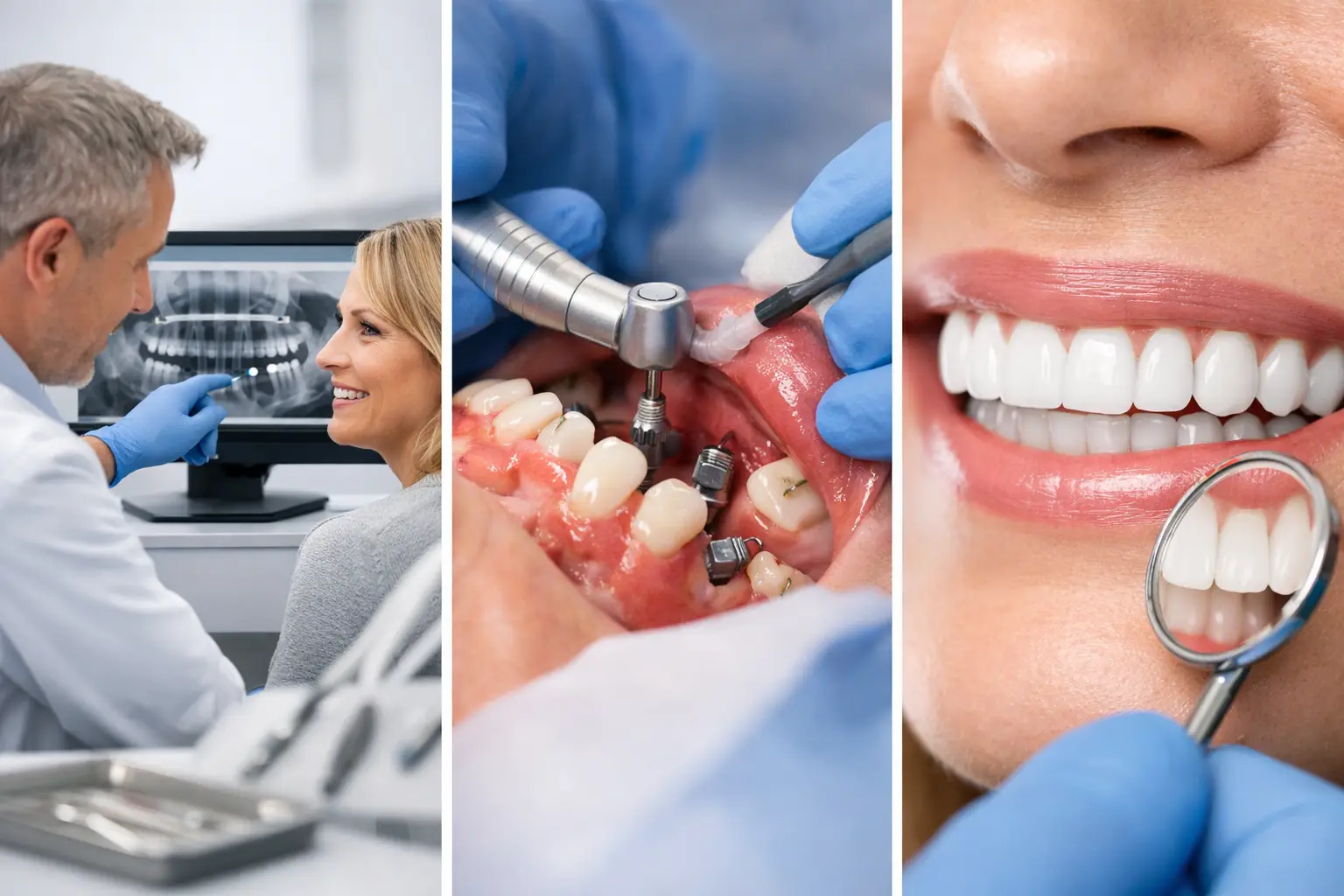
A full mouth rehabilitation example is often easier to understand when you can picture the patient behind the treatment plan. Consider an adult who has avoided smiling in photos for years. Several teeth are cracked or missing, old fillings are failing, chewing is uncomfortable, and the front teeth look worn and uneven. The concern is not simply cosmetic. The patient wants to eat comfortably, protect the teeth that remain, and feel confident speaking and smiling again.
Full mouth rehabilitation is the coordinated process of rebuilding oral health, function, and appearance when multiple dental problems affect the entire mouth. It is not a single procedure or a one-size-fits-all package. For one person, it may involve implants, crowns, and gum treatment. For another, it may mean treating infection, restoring worn teeth, and replacing only a few missing teeth. The best plan begins with a careful understanding of what is happening now and what will create a stable result for years to come.
What This Full Mouth Rehabilitation Example Involves
In this illustrative case, the patient has two missing back teeth, several large old fillings, a broken molar, worn front teeth, and a bite that has gradually changed over time. Because chewing has shifted to one side, some teeth are carrying more pressure than they should. There is also mild gum inflammation caused by plaque collecting around aging dental work.
The patient's first instinct may be to ask for veneers or whitening. Those options can be valuable, but placing cosmetic restorations before addressing disease, missing teeth, and bite imbalance can lead to disappointing or short-lived results. The priority is to create a healthy foundation first, then build a smile that looks natural and functions comfortably.
At Ashar Dentistry, a comprehensive consultation can bring the process into focus under one roof. The team reviews the patient's goals alongside the clinical findings, explains each recommendation in clear language, and maps treatment in manageable phases. This helps replace uncertainty with a plan the patient can understand.
Step 1: Start With a Complete Diagnosis
A full mouth rehabilitation starts with more than a quick look at individual teeth. The dentist evaluates the gums, jaw joints, bite, tooth structure, existing restorations, and areas of infection or decay. Digital X-rays and photographs help reveal concerns that are not visible in a mirror, including bone loss around missing teeth or decay beneath older crowns.
The conversation matters just as much. Does the patient wake with jaw soreness? Are there headaches, clenching, or grinding? Which foods have become difficult to eat? Is the patient most concerned about pain, appearance, or the fear that more teeth may fail? Those answers influence the order of care.
From there, the dentist determines which teeth can be predictably preserved and which have a poor long-term outlook. Saving a natural tooth is often preferred when its structure and supporting bone are healthy enough. However, a severely fractured or infected tooth may be better removed and replaced than repeatedly repaired. That decision is individualized, not automatic.
Step 2: Stabilize the Mouth Before Rebuilding It
In this example, treatment begins with periodontal care to reduce gum inflammation and improve the health of the tissues around the teeth. A broken molar with an infection requires root canal treatment and a protective crown. Another tooth cannot be saved because the fracture extends too far below the gumline, so it is carefully extracted.
This phase may not create the dramatic visual change patients imagine when they think of a new smile. It is still essential. Healthy gums and controlled infection provide a more predictable foundation for crowns, bridges, veneers, and implants.
Temporary restorations can be used when needed to protect prepared teeth and help the patient maintain normal appearance and function between appointments. For patients with dental anxiety, the pace can be adjusted. Comfort options, frequent communication, and planned breaks can make complex treatment feel far more manageable than trying to complete everything at once.
Step 3: Replace Missing Teeth With the Right Option
The two missing back teeth and the newly extracted tooth leave gaps that affect chewing and allow neighboring teeth to shift. In this case, dental implants are selected because the patient has sufficient bone support and wants fixed replacements that do not rely on adjacent healthy teeth.
An implant is a small post placed in the jawbone to support a crown after healing. It functions like a tooth root, helping provide stability for a replacement tooth. Implant treatment takes time, since healing and integration with the bone are part of achieving a durable outcome. Some patients are candidates for an implant soon after extraction, while others benefit from healing or bone grafting first.
Implants are not the only answer. A dental bridge can be an excellent choice when neighboring teeth already need crowns or when an implant is not appropriate. A partial denture may also be a practical, cost-conscious solution for some patients. The right choice depends on oral health, bone volume, medical history, timeline, budget, and personal preference.
Step 4: Rebuild the Bite With Crowns and Precise Planning
Once the gums are healthy and replacement planning is underway, the worn and weakened teeth can be restored. In this full mouth rehabilitation example, several teeth receive custom crowns because the remaining enamel is too compromised for fillings alone. Crowns cover and protect the tooth while restoring its shape and chewing surface.
The dentist does not simply make each tooth look better on its own. The height, position, and contours of the restorations are planned so the upper and lower teeth meet comfortably. This is especially important for patients with worn teeth, because years of grinding or erosion can reduce tooth height and alter the bite.
A trial smile or temporary restorations may be used to test the proposed shape and bite before final restorations are made. This step gives the patient an opportunity to see the direction of the smile and tell the dental team what feels right. It also allows the dentist to evaluate speech, comfort, and how the teeth function during normal movement.
Step 5: Add the Finishing Details
After implant crowns and final crowns are placed, the front teeth in this example are balanced for a more even, natural-looking smile. Depending on the patient's needs, this might include porcelain veneers, conservative bonding, or carefully designed crowns. Professional whitening may be completed before final shade selection if natural teeth will remain visible.
The goal is not an artificial, identical set of teeth. A successful rehabilitation should fit the patient's face, complexion, age, and preferences. Some patients want a brighter, more polished look. Others want subtle improvements that look like the smile they have always had, only healthier and more comfortable.
The final appointment includes careful bite adjustments. Even beautifully made restorations need to be checked as the patient bites, chews, speaks, and moves the jaw side to side. Small refinements can help protect the work and reduce strain.
What the Timeline Can Look Like
A straightforward rehabilitation may be completed over several months. A more complex case involving periodontal treatment, extractions, bone grafting, implants, orthodontic movement, or extensive healing can take longer. That is not a delay for its own sake. Each phase supports the next one, and rushing can compromise comfort, fit, or longevity.
Patients often appreciate a phased approach. Immediate concerns such as infection, pain, or a broken tooth are handled first. Then the restorative work can be scheduled around work, family responsibilities, and finances. Financing options may also make it easier to begin necessary care without postponing treatment indefinitely.
The Care Continues After the Final Visit
The new smile needs ongoing care just like natural teeth. Daily brushing, cleaning between teeth, routine exams, and professional cleanings protect the gums and restorations. A nightguard may be recommended for patients who clench or grind, particularly after extensive crown or implant work. Regular checkups also allow small concerns to be addressed before they become major repairs.
No two full mouth rehabilitations will look exactly alike, because no two mouths, health histories, or goals are exactly alike. If eating, smiling, or simply getting through the day has become difficult because of damaged or missing teeth, a consultation can be the calm first step toward a plan that feels clear, personal, and possible.
This article is general dental-health information from Ashar Dentistry in McKinney, TX and is not a substitute for an exam or personalised advice. Questions about your own teeth? Call us or book a visit.