
A missing tooth can change more than your smile. You may start chewing on one side, avoid photos, or notice that a familiar word does not sound quite the same. When considering a dental implant versus bridge, the best choice is rarely about choosing the most popular treatment. It is about protecting your oral health, meeting your day-to-day needs, and feeling confident in the care plan ahead.
At Ashar Dentistry, that conversation begins with a close look at your tooth, gums, bone support, bite, and goals. A bridge and an implant can both restore a missing tooth beautifully. They simply take different paths to get there.
Dental Implant Versus Bridge: The Core Difference
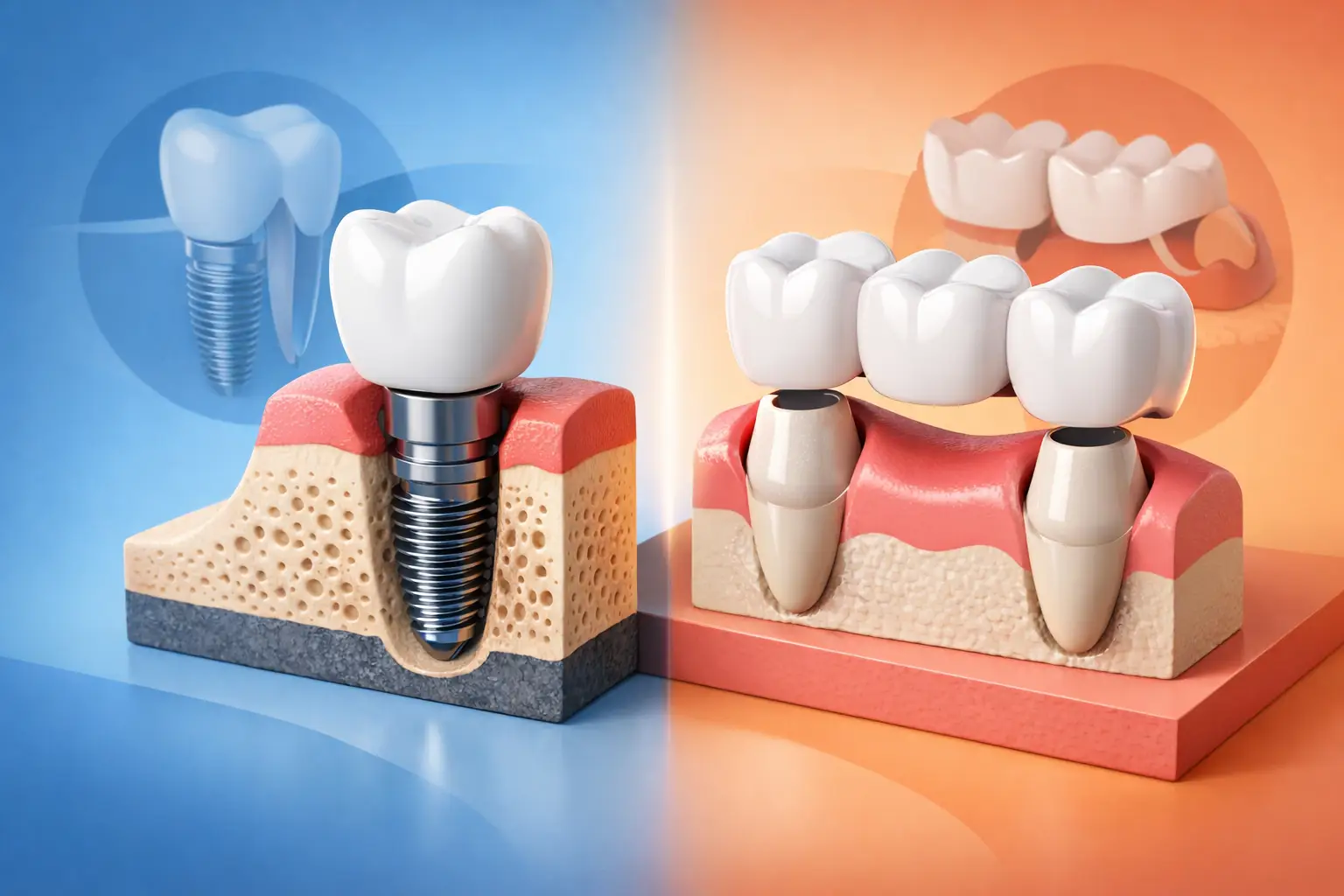
A dental bridge replaces a missing tooth by connecting an artificial tooth, called a pontic, to crowns placed on the teeth beside the gap. The neighboring teeth provide the support. For many patients, a bridge is a reliable and natural-looking way to restore function without surgery.
A dental implant replaces the missing tooth root as well as the visible tooth. A small titanium implant is placed in the jawbone, where it heals and integrates with the bone. Once it is ready, a custom crown is attached above the gumline. Because the implant stands on its own, the adjacent teeth usually do not need to be reshaped.
Both options can be designed to blend with your natural teeth. The differences become clearer when you consider the health of nearby teeth, the condition of your jawbone, the timeline you are comfortable with, and the investment that makes sense for you.
When a Dental Bridge May Be the Right Fit
A bridge can be an excellent solution when the teeth on either side of a gap already need crowns because of large fillings, fractures, or extensive wear. In that situation, restoring those teeth while replacing the missing one may be a practical, efficient treatment plan.
Bridges are also generally completed more quickly than implants. After the supporting teeth are prepared, a temporary bridge protects the area while a dental laboratory creates the final restoration. Many patients can receive their permanent bridge within a few weeks, depending on the case.
For someone who wants to avoid a surgical procedure or is not currently a candidate for implant placement, a bridge may offer a strong alternative. Medical history, certain medications, smoking, gum disease, and bone loss can affect whether an implant is advisable right away. That does not automatically rule out implants, but it may mean additional care is needed first.
The trade-off is that a traditional bridge depends on its neighboring teeth. Even healthy adjacent teeth typically need to be shaped to hold crowns. A bridge also requires careful cleaning beneath the replacement tooth, where food and plaque can collect. A floss threader, specialized bridge floss, or a water flosser can make this routine much easier.
Why Many Patients Choose a Dental Implant
The biggest advantage of an implant is independence. It replaces a single missing tooth without relying on the teeth beside it. For patients with otherwise healthy neighboring teeth, preserving that natural structure is often a meaningful benefit.
Implants can also help maintain bone in the area of the missing tooth. After a tooth is lost, the jawbone no longer receives the stimulation it once received from the tooth root. Over time, that area can shrink. An implant helps provide stimulation during chewing, which can support the underlying bone and help preserve facial contours.
From a daily-care perspective, an implant crown is brushed and flossed much like a natural tooth. There is no bridge span underneath to clean around. That simplicity is appealing, although implants still require consistent home care and professional cleanings. An implant cannot develop a cavity, but the gums and bone around it can become inflamed or infected without proper care.
An implant treatment timeline is longer because healing matters. After placement, the implant typically needs time to integrate with the jawbone before the final crown is placed. In some cases, a tooth can be removed and an implant placed at the same visit. In others, healing or bone grafting may be recommended before placement. This is why an individualized exam is essential rather than relying on a one-size-fits-all timeline.
Cost: Look Beyond the Initial Number
It is understandable to compare a dental implant versus bridge based on upfront cost. A bridge often has a lower initial cost than a single implant, particularly when no additional procedures are required. Insurance coverage also varies widely, and some plans may contribute differently to a bridge than to an implant.
Still, initial cost is only one part of the decision. A well-maintained bridge may last many years, but it may eventually need replacement. If decay, gum problems, or a fracture affects one of the supporting teeth, the entire bridge can be affected. An implant may involve a higher initial investment and a longer treatment process, yet it can be a durable long-term option with healthy gums, good bone support, and regular care.
The most useful question is not simply, "Which costs less?" It is, "Which option makes the most sense for my mouth over time?" Clear treatment planning should include anticipated procedures, timing, insurance considerations, and available financing options so you can decide without pressure or surprises.
Appearance and Comfort Matter Too
Modern crowns and bridges are created to match the color, shape, and character of your surrounding teeth. Whether you choose an implant crown or bridge, thoughtful planning is especially important for front teeth, where small details can make a visible difference.
An implant often feels most similar to having an individual natural tooth because it is supported independently. A bridge can also feel comfortable and secure once you adapt to it. The quality of the fit, the design of the bite, and the health of the supporting teeth matter as much as the type of restoration.
If you have a history of clenching or grinding, your dentist may recommend a nightguard to protect either restoration. Excessive bite force can damage natural teeth, crowns, bridges, and implants alike. Addressing the cause helps protect your investment.
What Your Evaluation Should Include
Choosing between these treatments should not happen from an X-ray alone. A comprehensive consultation evaluates your gum health, bite, neighboring teeth, bone volume, medical history, and cosmetic priorities. Advanced imaging may be used when implant planning is being considered, allowing the dentist to assess bone and position treatment precisely.
You should also have space to talk about practical concerns. If you are anxious about dental treatment, say so early. Comfort options, a clear step-by-step explanation, and a team that checks in with you throughout the process can make a significant difference. Restoring a missing tooth is important, but feeling respected and informed during treatment is important too.
Questions Worth Asking at Your Consultation
Ask whether the teeth beside the gap are healthy or already need crowns. Ask whether you have enough bone for an implant, whether grafting may be beneficial, and how long each option is expected to take. It is also reasonable to ask how you will clean the restoration, what follow-up care is needed, and what may happen if you delay replacing the tooth.
A missing tooth can allow nearby teeth to shift and may change how your upper and lower teeth meet. Replacing it sooner can often make treatment more straightforward, though the right timing depends on your individual health and circumstances.
The right restoration should let you eat, speak, smile, and care for your mouth with greater ease. If you are weighing an implant or bridge, a personal consultation can turn a difficult decision into a clear, comfortable next step.
This article is general dental-health information from Ashar Dentistry in McKinney, TX and is not a substitute for an exam or personalised advice. Questions about your own teeth? Call us or book a visit.