
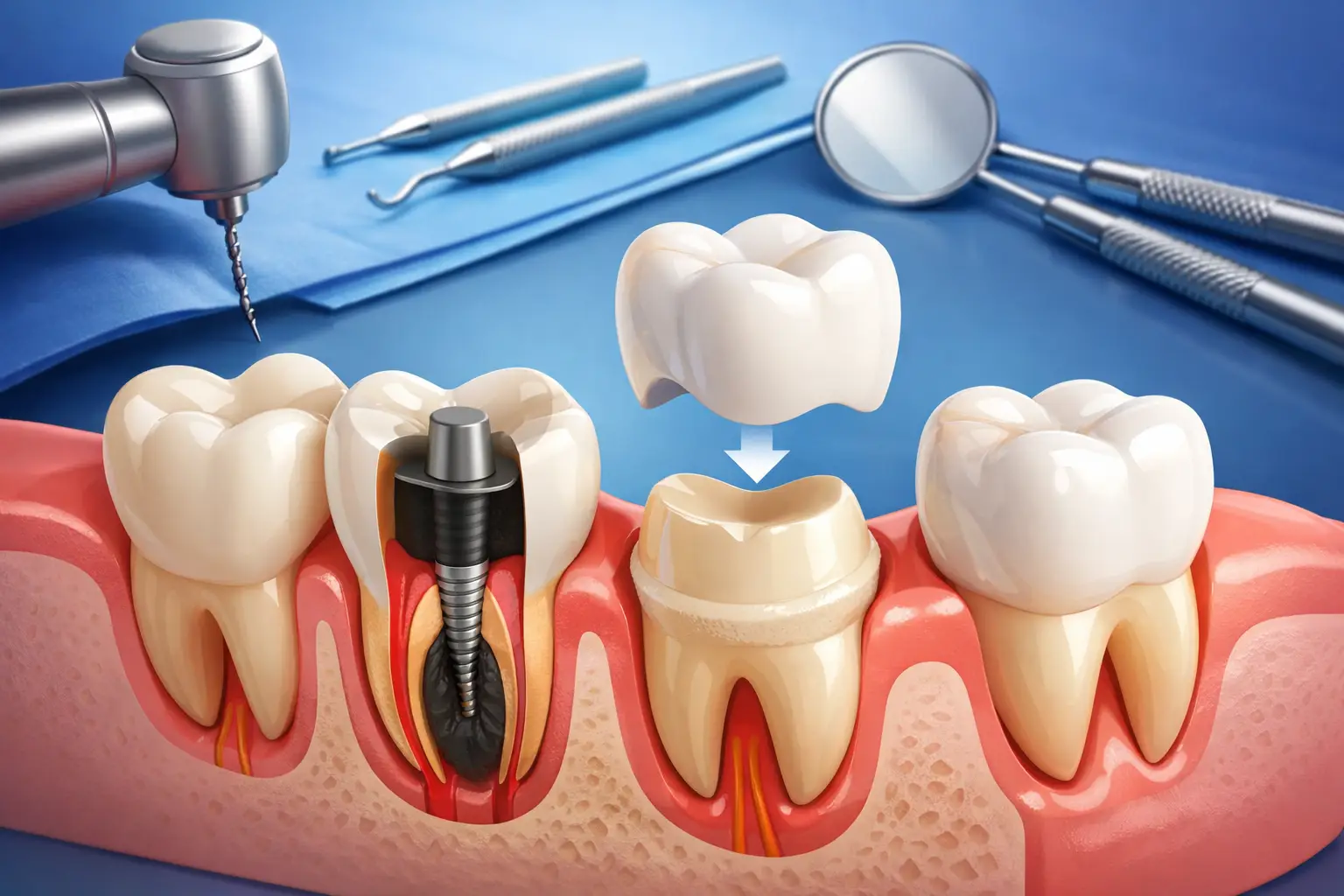
A root canal can stop a severe toothache and save a natural tooth that might otherwise need to be removed. But once the infection is treated, the next decision often matters just as much: do you need a dental crown after root canal treatment? For many back teeth, the answer is yes. A crown can protect the tooth from cracking under everyday chewing pressure and help it function comfortably for years to come.
The right recommendation depends on the tooth, how much healthy structure remains, where it sits in your smile, and whether it already has a large filling, fracture, or restoration. At Ashar Dentistry, we take time to explain those details clearly, so your care plan feels practical rather than overwhelming.
Why a Root Canal Tooth May Need a Crown
Root canal treatment removes inflamed or infected tissue from inside the tooth, disinfects the canals, and seals them. It is a highly valuable treatment because it preserves your natural tooth root and helps stop infection from spreading. However, the tooth may have already lost substantial structure before treatment even begins.
Decay, an old filling, a crack, or the access opening needed for the root canal can leave the remaining tooth walls more vulnerable. The issue is not that a root canal automatically makes every tooth brittle. Rather, a tooth that has needed root canal treatment has often endured significant damage and may no longer have enough strong enamel to withstand normal biting forces.
A crown covers the visible part of the tooth like a custom-fitted protective shell. It holds the remaining structure together, restores the tooth’s shape, and spreads chewing pressure more evenly. Without that protection, a weakened molar can crack while chewing something as ordinary as a sandwich crust, nuts, or ice. A deep crack may make the tooth impossible to save.
Which Teeth Usually Need a Crown?
Molars and premolars are the teeth most likely to benefit from a crown after root canal treatment. They do the heavy work of grinding food and experience substantial force every day. Even if a back tooth feels fine after the root canal, it may still be at greater risk of fracture without full coverage.
Front teeth are different. Incisors and canines generally experience less vertical chewing force and may retain more healthy structure after treatment. If a front tooth has a small access opening and is otherwise strong, a bonded filling may be enough. A crown may still be recommended when the tooth is discolored, badly fractured, has a large existing filling, or needs more support to restore its appearance and function.
This is why a one-size-fits-all answer is not helpful. Your dentist should evaluate X-rays, the amount of remaining healthy tooth structure, your bite, and any signs of cracks before recommending the final restoration.
When a Filling May Be Enough
A filling can sometimes be the right choice when a tooth has minimal damage, strong walls, and low bite pressure. This is more common with front teeth. Modern tooth-colored bonding can restore small openings conservatively and blend naturally with your smile.
Still, a filling does not wrap around and reinforce the tooth the way a crown does. If there is uncertainty about the strength of a back tooth, choosing a crown can be a more protective long-term decision.
When Should You Get the Crown?
In many cases, the crown should be placed soon after root canal treatment. Prompt restoration helps limit the time a vulnerable tooth is exposed to chewing forces, leakage around a temporary filling, and the possibility of fracture.
Sometimes your dentist may recommend waiting briefly. For example, a tooth with a significant infection or persistent tenderness may need time to settle before the final crown is placed. You may receive a temporary filling or temporary crown during this period. That does not mean the tooth is ready to be ignored. Continue avoiding hard, sticky, or very chewy foods on that side until the permanent restoration is complete.
If you had root canal treatment elsewhere, it is wise to schedule your restorative appointment without unnecessary delay. A tooth can feel normal yet still be structurally compromised. Waiting months can increase the chance that a manageable restoration turns into a more complex problem.
What Happens During Crown Treatment?
The crown process is organized and generally straightforward. Your dentist first confirms that the root canal tooth is healing appropriately and reviews the remaining tooth structure. If the tooth has lost a large amount of material, a buildup may be placed to create a stable foundation for the crown. In certain cases, a post may be used inside one of the root canals to help retain that buildup. A post does not strengthen the root itself, so it is used only when it is clinically necessary.
Next, the tooth is shaped gently to create room for the crown. Digital impressions or traditional impressions are taken so the final crown can be made to fit your bite precisely. A temporary crown may be placed to protect the tooth while your permanent restoration is being crafted.
At the final appointment, your dentist checks the fit, bite, color, and contour before securely bonding the crown in place. The goal is a restoration that feels comfortable, looks natural, and lets you chew with confidence.
Choosing a Crown Material
The best material depends on the location of the tooth, your bite, your cosmetic goals, and the amount of space available. All-ceramic crowns can offer a natural, lifelike appearance, making them a popular option for visible teeth. Zirconia crowns are known for strength and can work well in areas that receive heavier chewing pressure. In some cases, other materials may be appropriate.
There is no single “best” crown for every patient. A thoughtful recommendation balances durability with aesthetics, rather than focusing on one feature alone.
Will the Tooth Hurt Afterward?
It is normal to have mild tenderness in the jaw or gums after a root canal or crown appointment, especially once the numbness wears off. The tooth may feel slightly different for a few days as you adjust to the restoration. A properly fitted crown should not cause sharp pain when you bite or make your bite feel noticeably uneven.
Call your dental office if you have worsening pain, swelling, pressure that does not improve, a loose temporary crown, or a bite that feels too high. These concerns are often easier to address early. You should also contact your dentist promptly if the temporary crown comes off, since the prepared tooth needs protection.
How Long Does a Crown Last After a Root Canal?
A well-made crown can last many years, but it is not indestructible. Its longevity depends on daily habits, the health of the gums, the condition of the tooth underneath, and the force placed on it. Grinding or clenching, chewing ice, using teeth to open packages, and skipping preventive visits can shorten the life of a restoration.
Brush twice a day with fluoride toothpaste, clean between teeth daily, and maintain regular dental checkups. The edge where the crown meets the natural tooth needs careful cleaning because decay can still develop there. If you clench or grind your teeth, a custom nightguard may help protect both your crown and your natural teeth.
Protecting the Tooth You Worked to Save
Choosing a crown after a root canal is often about protecting the investment you have already made in saving your natural tooth. It is not an automatic recommendation for every tooth, but for many molars and significantly damaged teeth, it is an essential part of completing treatment.
If you have recently had a root canal, or have been living with a temporary filling while deciding what to do next, schedule an evaluation. A clear conversation about the strength of your tooth, the appearance you want, and the timing that works for you can turn the next step into a comfortable, confident one.
This article is general dental-health information from Ashar Dentistry in McKinney, TX and is not a substitute for an exam or personalised advice. Questions about your own teeth? Call us or book a visit.