
A crown is not simply a cap placed over a tooth. It is a custom restoration that needs to work with your bite, protect what remains of the natural tooth, and look at home in your smile. Choosing the right dental crown is therefore less about finding one universally “best” material and more about making a thoughtful decision based on where the tooth is, why it needs treatment, and what matters most to you.
For many patients, a crown is recommended after a large filling, a root canal, a fracture, severe wear, or extensive decay has left a tooth too weak for another filling. It may also complete a dental implant or support a bridge. The right restoration can help you chew comfortably and smile confidently for years, but a good result begins with a clear, personalized conversation.
Why a Dental Crown May Be Recommended
Natural enamel is remarkably strong, but it cannot always be rebuilt predictably with filling material alone. When a tooth has lost substantial structure, it may flex under chewing pressure. Over time, that movement can lead to cracks, sensitivity, a broken cusp, or another dental emergency.
A crown covers the visible portion of the tooth above the gumline, helping hold it together and distribute biting forces more evenly. If you have had root canal treatment, a crown may be recommended because the tooth can become more vulnerable to fracture after decay and infection have been removed. For a dental implant, the crown is the lifelike tooth replacement that sits above the implant post.
The goal is not to place a crown when a more conservative option will work. A careful exam, X-rays, and bite assessment help determine whether a filling, onlay, veneer, or crown provides the best long-term protection.
Choosing the Right Dental Crown Starts With Location
The same crown material is not ideal for every tooth. Back teeth endure much greater chewing pressure than front teeth, while front teeth are more visible when you speak and smile. Your dentist will consider both function and appearance before recommending an option.
Front Teeth: Appearance and Light Reflection
For a front tooth, color matching, translucency, and shape are especially significant. All-ceramic crowns are often an excellent choice because they can mimic the way natural enamel reflects light. They can be customized to complement neighboring teeth rather than looking flat or overly opaque.
That said, esthetics should not outweigh function. If you clench or grind your teeth, even a beautiful front crown needs enough strength to handle your bite. In some cases, your dentist may recommend a specific ceramic material, modify the design, or suggest a nightguard to protect your restoration and natural teeth.
Back Teeth: Strength Under Pressure
Molars and premolars need restorations that can stand up to daily chewing. Zirconia crowns are widely used for posterior teeth because they are highly durable and can provide a natural-looking result. Modern zirconia is available in more esthetic variations than earlier versions, making it a practical option when strength is the priority without sacrificing the appearance of your smile.
Porcelain fused to metal crowns can also be appropriate in certain situations. They have a strong metal foundation with porcelain layered over it, though a thin dark line near the gumline can sometimes become visible over time, particularly if gums recede. They may not be the first cosmetic choice for a highly visible front tooth, but they can still be a reliable restorative solution.
Understanding Common Crown Materials
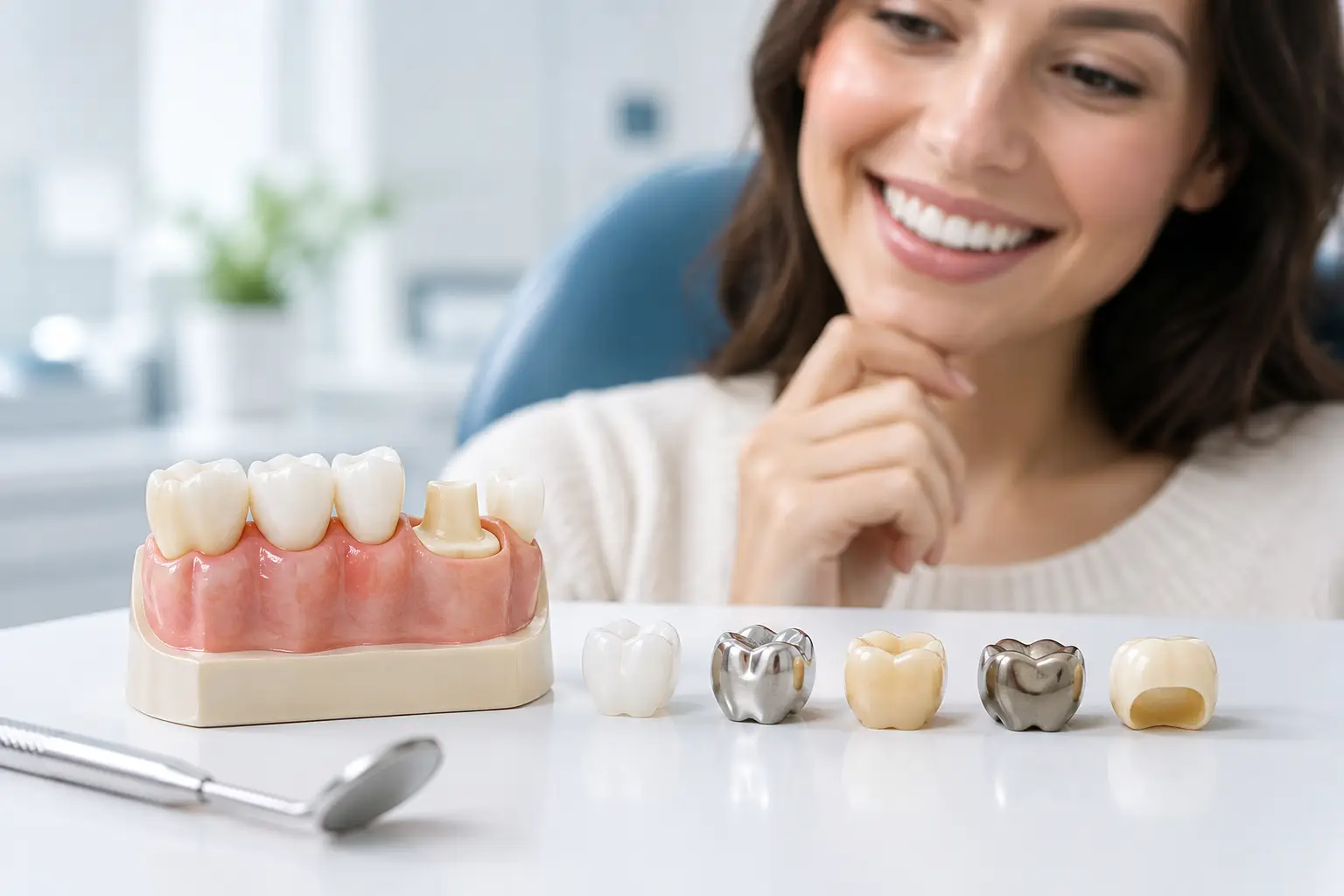
Your dentist should explain the advantages and trade-offs of the materials available for your particular tooth. Here are the options patients most often hear about.
All-ceramic or porcelain crowns offer excellent esthetics and are especially popular for front teeth. Depending on the type of ceramic used, they can be a strong option for many areas of the mouth. Their suitability depends on the amount of remaining tooth structure, your bite, and whether you grind your teeth.
Zirconia crowns are known for exceptional durability. They are commonly recommended for molars, implant crowns, and patients with heavier bites. Newer multilayer zirconia options can provide a more natural shade transition, although some highly esthetic ceramics may still offer greater translucency for select front-tooth cases.
Lithium disilicate crowns balance strength and natural appearance. Often used for visible teeth and some premolars, they can be an appealing choice when lifelike color and light transmission are high priorities. As with any material, your dentist will decide whether it is strong enough for the location and demands of your bite.
Gold or metal crowns remain extremely durable and require less removal of natural tooth structure in some cases. They are less common today because of their appearance, but they can be a sensible choice for a far-back molar where durability matters more than color.
Your Bite Matters More Than You May Realize
A crown can be made from an excellent material and still fail early if it is not designed around your bite. Clenching, grinding, uneven contact, and habits such as chewing ice or hard candy all place added stress on teeth and restorations.
During planning, your dental team should check how your upper and lower teeth meet, not just the tooth receiving the crown. A crown that is even slightly too high can cause soreness or make chewing feel unnatural. In some cases, a small adjustment resolves the issue quickly. Persistent discomfort, however, should never be ignored.
If you wake with jaw tension, have frequent headaches, notice worn teeth, or have cracked restorations, tell your dentist. A custom nightguard may be recommended after crown treatment to reduce grinding-related damage while you sleep.
The Health of the Tooth and Gums Comes First
A crown can protect a tooth, but it does not prevent decay or gum disease on its own. The edges of a crown must fit closely against the tooth so bacteria and plaque have fewer places to collect. Healthy gums also frame the restoration and help it look natural.
Before proceeding, your dentist may need to address active decay, gum inflammation, infection, or insufficient tooth structure. If the tooth has fractured below the gumline or has a deep crack extending into the root, a crown may not be the right answer. This can be disappointing, but clear diagnosis prevents you from investing in a restoration with a poor long-term outlook.
For implant crowns, planning also includes the health and volume of the jawbone, gum contour, and the position of surrounding teeth. Thoughtful planning helps the final tooth look natural and function comfortably.
Color Matching Is More Than Picking a Shade
Patients often ask for the whitest possible crown, but a crown should usually blend with the teeth around it. A shade that is too bright can make one tooth stand out in an unintended way. Your dentist will evaluate color, translucency, surface texture, and shape to create a result that complements your smile.
If you are considering professional whitening, discuss the timing before your crown is made. Whitening changes natural tooth color, but it does not lighten porcelain or zirconia after placement. Whitening first can make it easier to match your new crown to the brighter shade you want to maintain.
Ask About the Process, Timeline, and Cost
A well-made crown requires careful preparation, impressions or digital scanning, communication with a dental laboratory when needed, and precise placement. Depending on your treatment plan and technology, you may receive a temporary crown while your final crown is being made. The temporary protects the prepared tooth but is not designed to function like the final restoration, so avoid very sticky or hard foods unless your dentist advises otherwise.
Cost varies based on the material selected, the tooth’s location, whether additional treatment is needed, and your dental insurance benefits. It is reasonable to ask for a clear estimate before treatment begins. If cost is a concern, ask about financing options as well as the clinical reason one material is recommended over another. The least expensive option is not always the best value if it does not meet the functional demands of the tooth.
How to Care for a New Crown
Crowns need the same daily care as natural teeth. Brush twice a day with fluoride toothpaste, clean between teeth every day, and keep regular dental visits so your dentist can monitor the crown, gum tissue, and supporting tooth. Flossing around the crown is essential because decay can still develop at the margin where the crown meets the tooth.
Avoid using your teeth as tools to open packaging, and be cautious with ice, popcorn kernels, and other hard foods. If a crown feels loose, chips, causes pain, or changes the way your teeth come together, schedule an evaluation promptly. Early attention can often prevent a smaller concern from becoming a more complicated repair.
At Ashar Dentistry, crown treatment is planned around the whole person, not just a single tooth. You deserve to understand your options, feel comfortable asking questions, and leave with a restoration that supports both your oral health and your confidence. A consultation is a simple first step toward protecting the tooth you have and enjoying your smile without second-guessing every bite.
This article is general dental-health information from Ashar Dentistry in McKinney, TX and is not a substitute for an exam or personalised advice. Questions about your own teeth? Call us or book a visit.