
Losing one or more teeth can affect much more than a photo. It can change how comfortably you chew, how clearly you speak, and whether you feel like yourself when you smile. When comparing bridge versus dentures, the right answer is rarely about choosing the “best” treatment in the abstract. It is about finding the option that fits your number of missing teeth, the health of your remaining teeth and gums, your lifestyle, and your long-term goals.
A thoughtful conversation can turn a decision that feels overwhelming into a clear plan. At Ashar Dentistry, we take time to understand what you need now and what will support your oral health in the years ahead.
Bridge Versus Dentures: The Core Difference
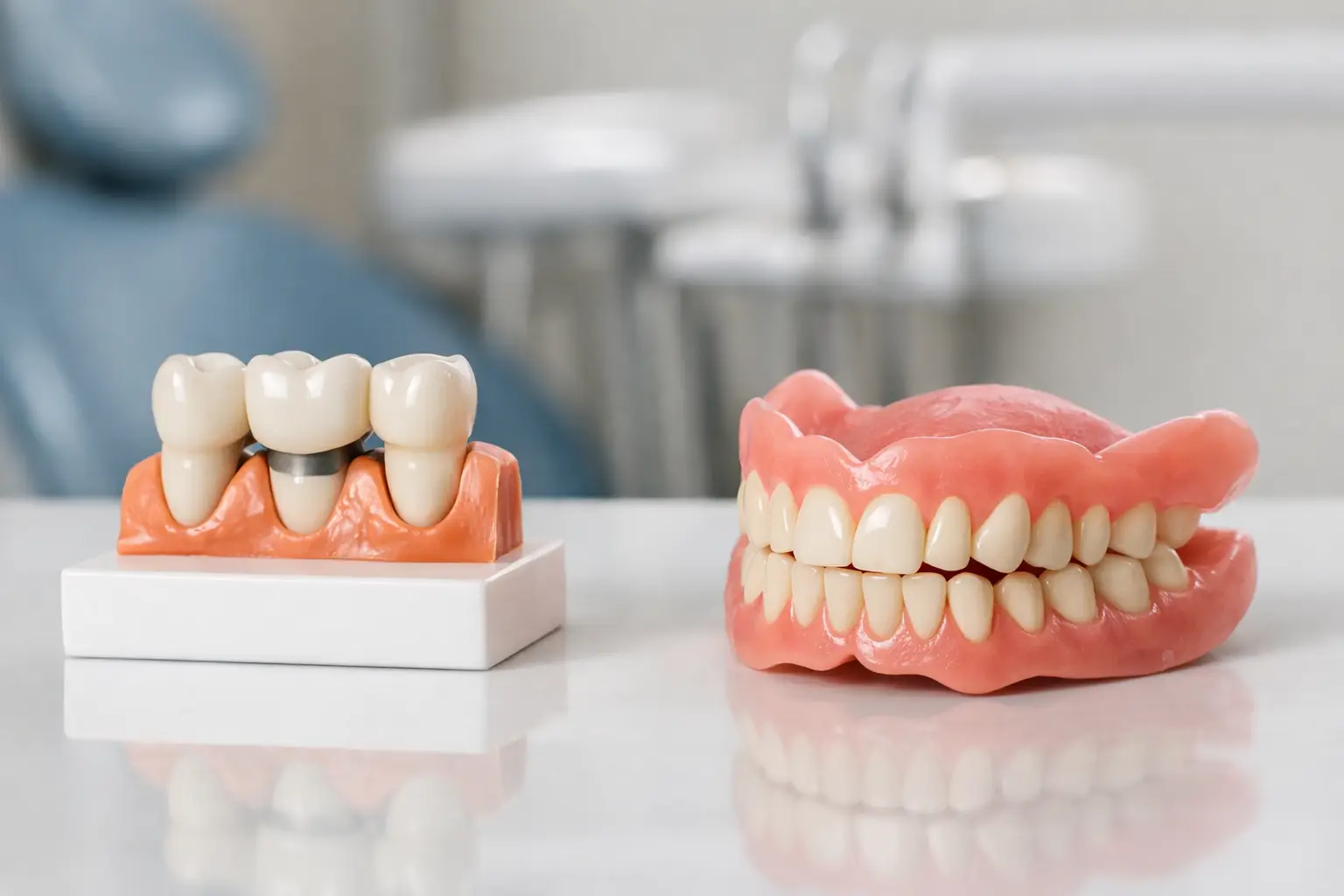
A dental bridge is a fixed restoration. It fills a gap by attaching an artificial tooth, or teeth, to crowns placed on the natural teeth beside the space. Once it is cemented in place, you do not remove it at home. For a single missing tooth or a short span of missing teeth, a bridge can restore a natural-looking smile and give you dependable chewing function.
Dentures are removable replacements for missing teeth. A partial denture fills spaces when some healthy natural teeth remain. A full denture replaces an entire upper or lower arch. Modern dentures can look far more natural than many people expect, and they are designed around the contours of your mouth for a more comfortable fit.
Both options can restore appearance and function. The meaningful differences are how they are supported, how they feel day to day, the care they require, and which clinical situation they address best.
When a Dental Bridge May Be the Better Fit
A bridge is often a strong option when you are missing one tooth or a few teeth in a row and have healthy teeth on either side of the gap. It stays in place, so many patients appreciate that it feels closer to natural teeth than a removable appliance. There is no need to take it out at night, carry a denture case, or use adhesive.
For someone with a busy work schedule in McKinney, Frisco, or Plano, that fixed convenience can be appealing. You brush the bridge and surrounding teeth as part of your usual routine, though cleaning underneath the artificial tooth requires a floss threader, special floss, or an interdental brush. Our team will show you how to keep that area clean without making your routine complicated.
A bridge can also be a practical choice if the teeth next to the missing space already need crowns because they are heavily filled, cracked, or worn. In that situation, the supporting crowns may serve two purposes: protecting those teeth while closing the gap.
There are trade-offs. A traditional bridge requires the dentist to reshape the supporting teeth so crowns can fit over them. That may be appropriate and beneficial for compromised teeth, but it is less appealing when neighboring teeth are completely healthy. A bridge also does not replace the missing tooth root, so the bone beneath the gap may gradually shrink over time.
With attentive home care and regular dental visits, a well-made bridge can last many years. Its lifespan depends on factors such as bite forces, gum health, cavity risk around the supporting teeth, and consistent cleaning.
What a bridge can feel like
After an adjustment period, a bridge is typically stable for speaking and eating. You may notice its shape at first, particularly with your tongue, but most patients adapt quickly. Because it is fixed, there is generally less concern about movement than with a removable denture.
That stability does not mean every bridge is automatically right for every gap. If the supporting teeth have gum disease, are loose, or cannot bear the added force safely, another approach may protect your smile better.
When Dentures May Make More Sense
Dentures are especially useful when several teeth are missing in different parts of the mouth, when an entire arch needs replacement, or when the remaining teeth cannot reliably support a bridge. They can restore a fuller smile, support the lips and cheeks, and make it easier to eat a broader range of foods.
A partial denture may be designed to clasp discreetly around remaining teeth, while a full denture rests on the gums and underlying bone. Both are custom-made, and the quality of the fit matters. A denture should be planned around your bite, facial appearance, gum contours, and comfort, not treated as a one-size-fits-all appliance.
One advantage is that dentures can replace many teeth without preparing each adjacent tooth for a crown. They are also often more affordable upfront than multiple fixed restorations. For patients who need a prompt, practical solution after extractions or extensive tooth loss, dentures can be an important step toward eating and smiling with greater confidence.
The adjustment period deserves an honest conversation. New dentures can feel bulky at first, and speech may take practice. Full dentures may move slightly during eating, especially as the jawbone and gums change shape over time. Sore spots can develop and usually require a simple adjustment appointment. These are normal parts of the adaptation process, not signs that you should simply tolerate discomfort.
Daily care for dentures
Dentures should be removed and cleaned daily using products made for dental appliances. They should not be cleaned with abrasive toothpaste, which can scratch the surface and allow stains to collect more easily. Your gums, tongue, palate, and remaining natural teeth still need daily brushing.
Dentures also need periodic professional evaluation. Even if the appliance looks fine, changes in your gums and jawbone can affect the fit. Relining, repair, or replacement may be needed over time to keep the denture comfortable and functional.
Appearance, Comfort, and Eating: Real-Life Priorities
Patients often ask which option looks more natural. A custom bridge can blend beautifully with nearby teeth because its color, shape, and translucency are selected to match your smile. A well-designed partial or full denture can also create a natural, balanced appearance. The result depends greatly on careful planning, high-quality materials, and communication about what you want your smile to look like.
Comfort is more individual. A fixed bridge usually wins for patients who do not want to remove an appliance. Dentures can be very comfortable when they fit well, but they rest on soft tissue and may need adjustments as the mouth changes. If you have a strong gag reflex or dental anxiety, mentioning that early helps us plan your appointments and comfort options with care.
Eating is another important distinction. A bridge generally allows more chewing confidence than a traditional removable denture, although it is still wise to avoid biting extremely hard foods directly on a bridge. Denture wearers often do best starting with soft foods, taking smaller bites, and chewing on both sides at once. With patience and practice, many people return to enjoying a satisfying variety of foods.
Do Not Overlook the Health of Your Remaining Teeth
The condition of your remaining teeth often guides this choice more than any single preference. Before recommending a bridge or dentures, your dentist should evaluate your gums, bone support, bite, decay risk, tooth position, and the stability of any existing crowns or fillings.
For example, a patient missing one tooth but struggling with active gum disease may need periodontal care before a bridge is considered. A patient with several failing teeth may be better served by a denture plan than by placing bridges on teeth with an uncertain outlook. Treating the foundation first can prevent repeated treatment and unnecessary expense later.
Leaving a gap unaddressed can allow nearby teeth to shift and can change the way your upper and lower teeth meet. Missing teeth may also make it harder to chew effectively. Replacing them is not only a cosmetic decision. It is a way to protect function and support a healthier bite.
Where Dental Implants Fit Into the Conversation
Implants are not the same as a bridge or traditional dentures, but they may be worth discussing. An implant replaces the tooth root with a small post in the jawbone. It can support a single crown, a bridge, or help stabilize a denture.
Implant-supported dentures can reduce movement and improve chewing ability for qualified patients. An implant-supported bridge may avoid placing crowns on healthy neighboring teeth. However, implants involve surgery, healing time, adequate bone, and a higher initial investment. They are an excellent solution for many people, but not every person is a candidate or wants that treatment path.
The goal is not to steer you toward the most complex option. It is to present the choices clearly, including their benefits, limitations, expected maintenance, and cost considerations, so you can decide with confidence.
Choosing a Plan You Can Feel Good About
A bridge may be ideal when you have a short gap and strong adjacent teeth. Dentures may be the more sensible answer when you need to replace multiple teeth or an entire arch. Sometimes the best plan includes other treatments first, such as removing an unhealthy tooth, treating gum disease, or considering implant support.
During a consultation, you should expect clear imaging, an evaluation of your bite and oral health, and a discussion that respects your priorities. Ask how each option will affect eating, cleaning, appearance, future repairs, and the teeth you still have. If cost is a concern, a phased plan or financing options may make necessary care feel more manageable.
You do not have to make this decision alone or rush into a solution that does not feel right. A comfortable, well-explained consultation is a meaningful first step toward a smile that works for your life again.
This article is general dental-health information from Ashar Dentistry in McKinney, TX and is not a substitute for an exam or personalised advice. Questions about your own teeth? Call us or book a visit.